
-
-
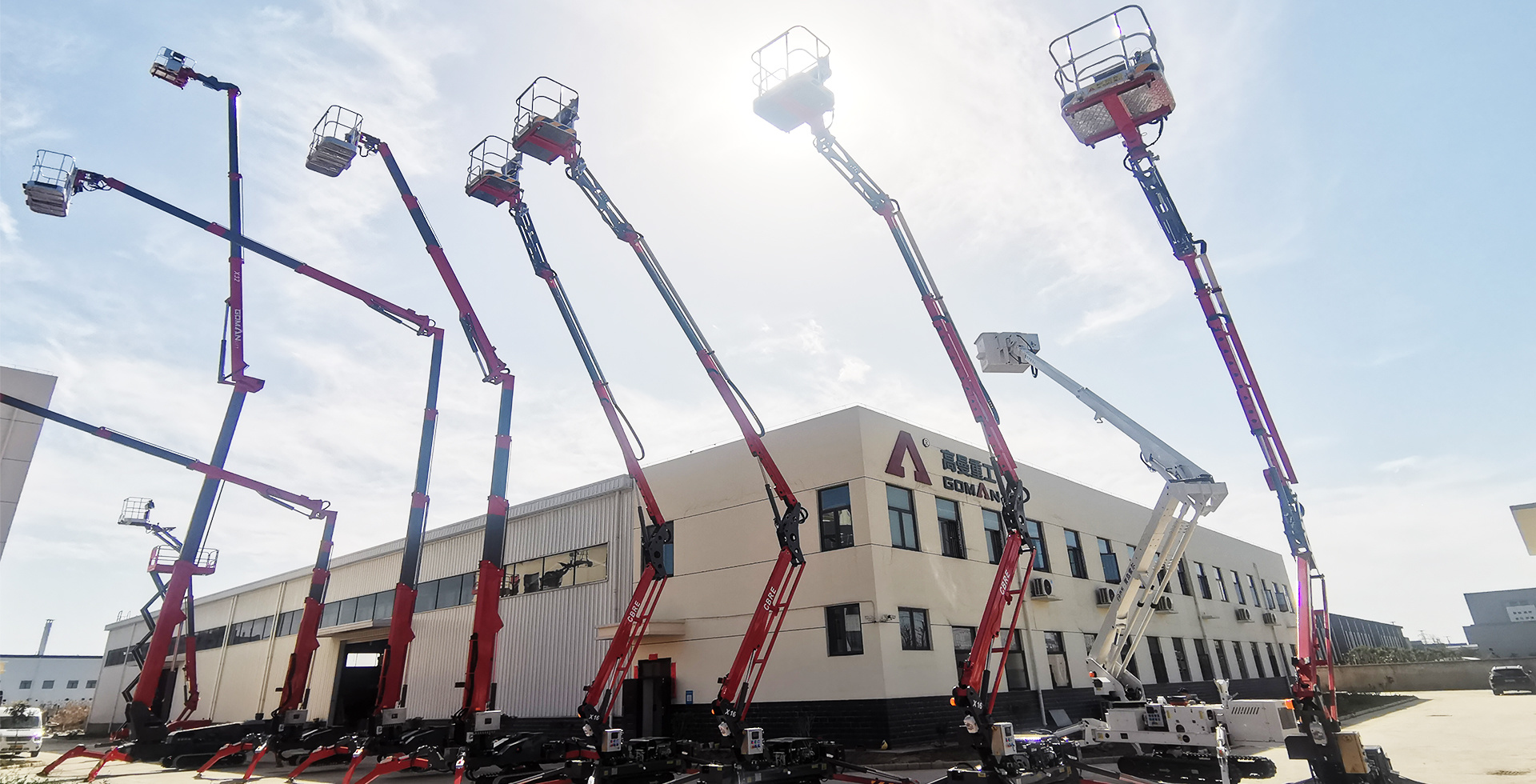
SolutionGoman Lift provides spider lifts, insulated bucket trucks and scissor lifts for power, commercial, transit and municipal aerial operations. Our project cases cover airports, high-speed stations, malls and substations with 500+ global clients.
-
-
ProductGoman Lift manufactures full series aerial work platforms, including tracked spider lifts, articulating boom lifts, telescopic lifts, insulated tracked lifts for live-line power maintenance, scissor lifts and trailer-mounted lifts. Factory direct supply.
-
BlogGOMAN LIFT News Center focuses on sharing professional expertise about aerial work equipment, publishing product comparisons, performance analysis and working condition selection guides for spider lifts, Insulated Tracked Lifts, articulated & telescopic boom lifts and Scissor Lifts. It also features the latest GOMAN LIFT corporate updates, project delivery cases and cutting-edge industry trends.
-
RecruitIt is our consistent talent development philosophy to grow and progress together with employees. Adhering to people-oriented management, we unite staff with promising career prospects and ambitious goals. We uphold equality for all and care for every talent.
Consultation Hotline
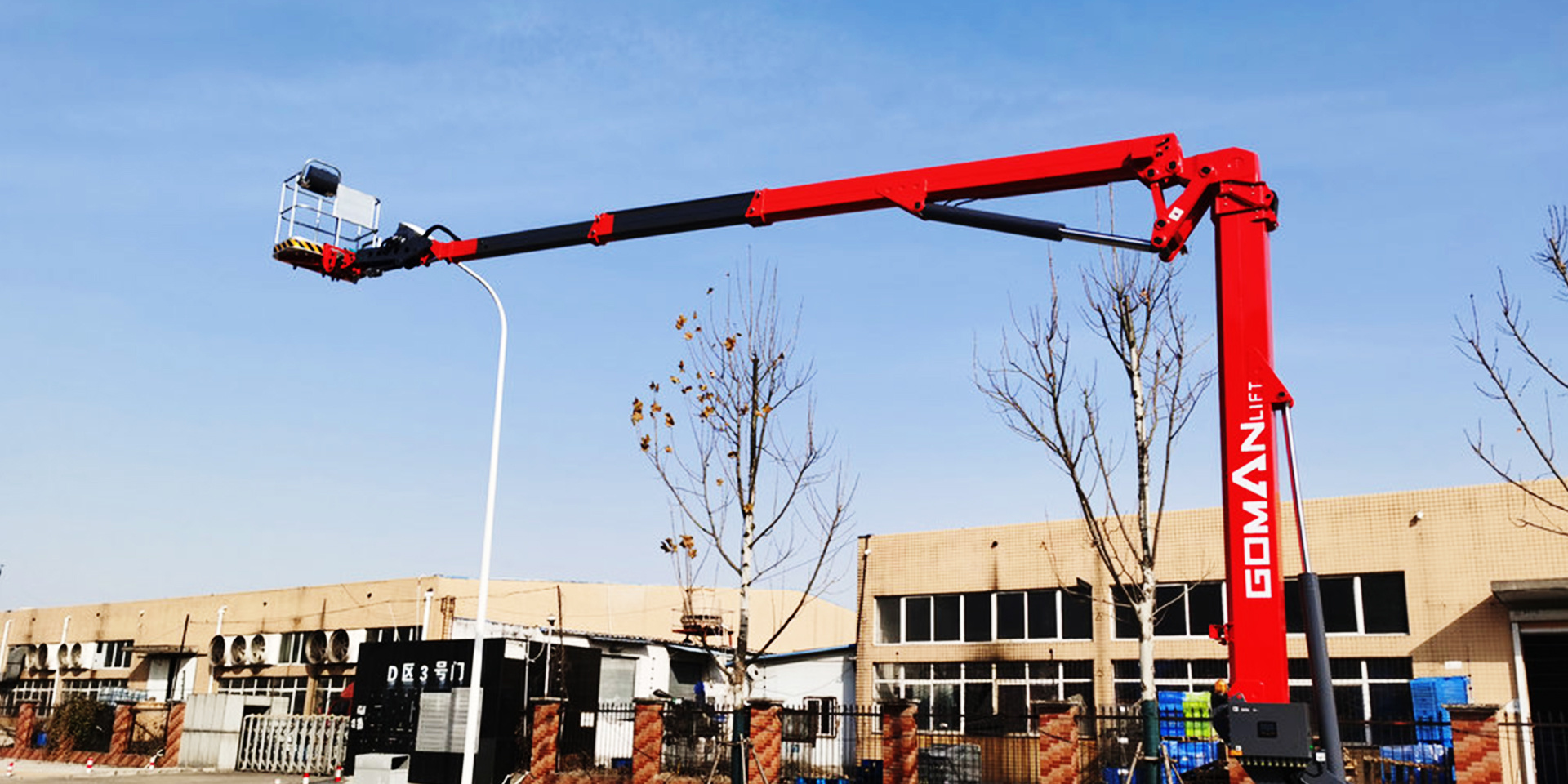
What Are the Differences Between Spider Lifts and Traditional Aerial Work Platforms
Time
2026-06-24
浏览量
199
Compare spider lifts vs traditional aerial work platforms. Learn key differences in chassis, floor protection, indoor access, silent electric operation & live-line power maintenance for government buildings, scenic spots and substations.
Core Structural & Chassis Differences
Spider lifts adopt foldable bionic spider outriggers plus lightweight non-marking rubber tracks. Folded width is only 0.76–0.88m, enabling passage through standard doors and cargo elevators. Each outrigger supports independent automatic leveling for uneven ground.
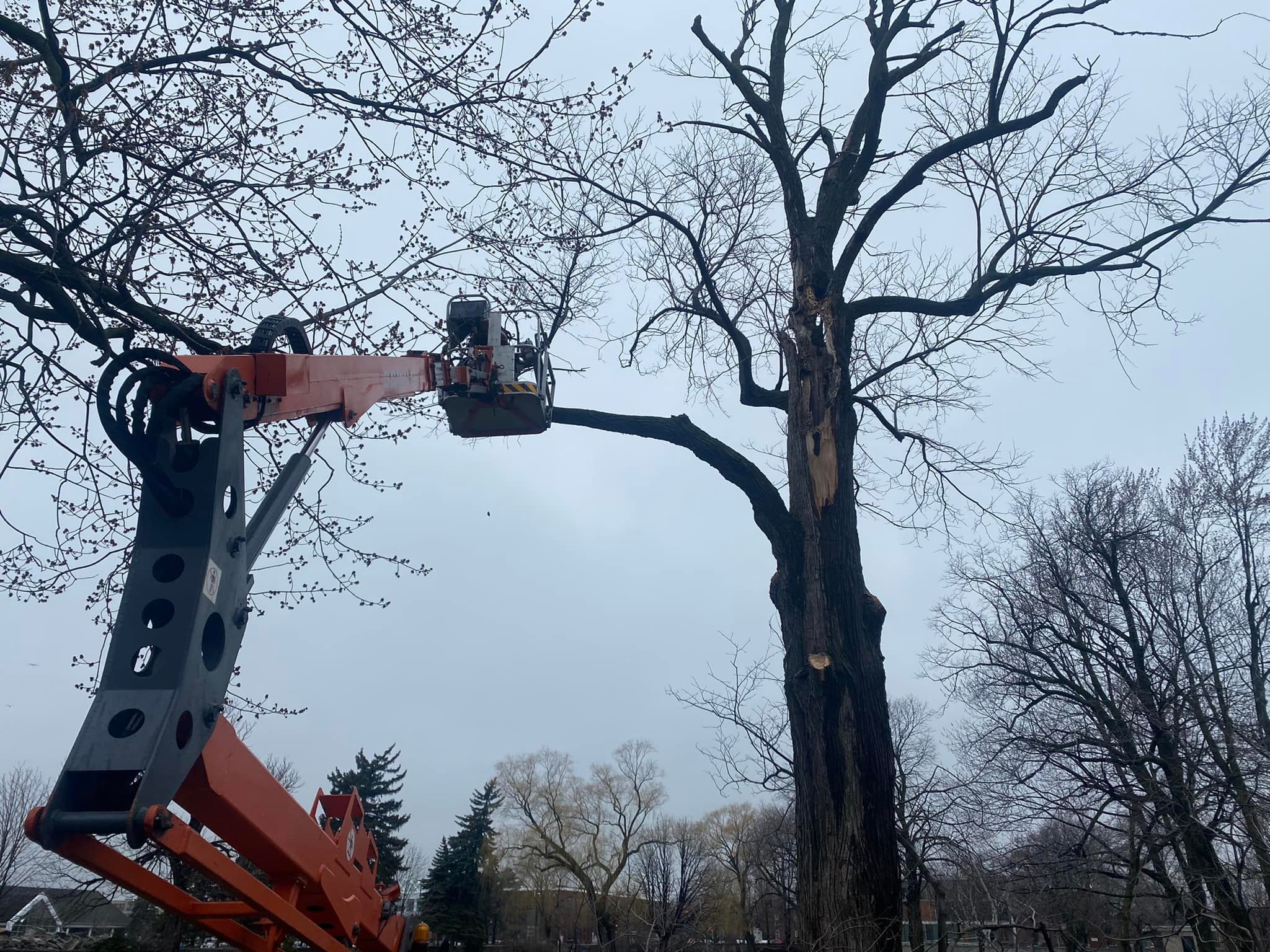
Traditional wheeled aerial work platforms or truck-mounted aerial lifts feature wide heavy wheel chassis. Their folded width exceeds 1.5m, requiring large flat ground for outrigger deployment, and cannot enter indoor narrow passages or elevators.
Floor Protection Performance (Critical for Indoor & Cultural Venues)
Equipped with low ground-pressure polyurethane tracks, spider lifts leave zero scratches, black rubber marks or cracks on marble, stone and epoxy floors, safe for cultural relic venues and government service halls.
Traditional heavy wheeled aerial equipment generates high ground pressure, easily damaging premium decorative floors and causing permanent ground damage.
Indoor Operation & Noise & Emission Contrast
Most spider lifts are full-electric with noise below 55dB, delivering library-quiet zero-emission operation ideal for ultra-short zero-downtime night maintenance inside atriums, stations and memorial sites.
Conventional aerial work platforms mostly run on diesel engines, creating loud noise and exhaust fumes that are prohibited in enclosed public service buildings.
Unique Advantages of Insulated Spider Lifts for Live-Line Power Maintenance
Goman insulated spider tracked lifts are fitted with full insulated booms customized for 10kV/35kV live-line repair. Compact tracks work smoothly in narrow substations, mountainous muddy areas and compact power distribution zones.
Traditional truck-mounted insulated bucket trucks have bulky bodies limited to wide outdoor roads. They cannot reach narrow internal substation corridors and rely on trailers for transportation.
Maneuverability & Fast Deployment
Spider lifts fold compactly for elevator transportation. Full deployment and retraction finish within 90 seconds, perfectly matching short night maintenance windows without disrupting daytime operation.
Traditional aerial lifts have complicated outrigger setup and retraction procedures, taking much longer to prepare and evacuate the site.
Operation Precision
Spider lifts support 360° continuous rotation and millimeter-level micro-motion control, avoiding collisions with delicate lamps, glass curtain walls and power cables during precise overhaul.
Traditional boom lifts have large mechanical inertia, making tiny fine adjustments difficult and raising risks of scratching architectural and electrical facilities.
Applicable Scenarios
Ideal Scenarios for Spider Lifts
Municipal government service centers, red cultural tourism squares, high-speed railway stations, airports, commercial complexes, high-ceiling indoor atriums, substation live-line maintenance and mountain emergency power rescue.
Ideal Scenarios for Traditional Aerial Work Platforms
Open-air construction sites, outdoor factory workshops and wide municipal road facade projects with unlimited space and no strict floor protection requirements.
Previous:7 Reasons for the Rapid Growth of Spider Cars
Recommended News

Address : 188 Doubu Avenue, Hannan District, Wuhan 430090,China
Jack: 0086 18627769149(wechat/whatsApp)
Fendi: 0086 13339994983(wechat/whatsApp)
Chole: 0086 13886057623(wechat/whatsApp)
Ellen: 0086 13627238296 (wechat)
Tel: 0086 27 8485 5127
Fax : 0086 27 8485 5128
Email : sales@gomanlift.com