-
-
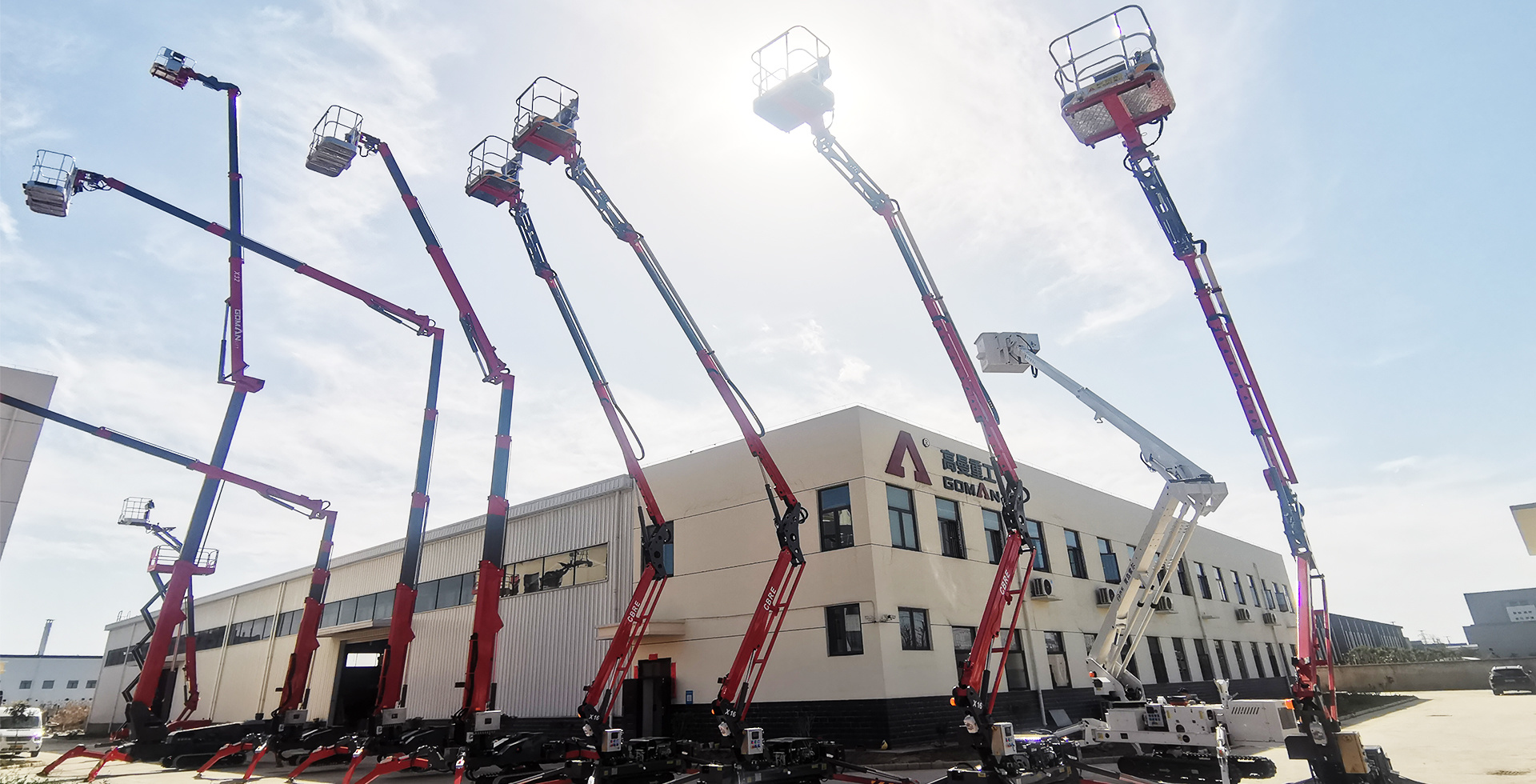
SolutionGoman Lift provides spider lifts, insulated bucket trucks and scissor lifts for power, commercial, transit and municipal aerial operations. Our project cases cover airports, high-speed stations, malls and substations with 500+ global clients.
-
-
ProductGoman Lift manufactures full series aerial work platforms, including tracked spider lifts, articulating boom lifts, telescopic lifts, insulated tracked lifts for live-line power maintenance, scissor lifts and trailer-mounted lifts. Factory direct supply.
-
BlogGOMAN LIFT News Center focuses on sharing professional expertise about aerial work equipment, publishing product comparisons, performance analysis and working condition selection guides for spider lifts, Insulated Tracked Lifts, articulated & telescopic boom lifts and Scissor Lifts. It also features the latest GOMAN LIFT corporate updates, project delivery cases and cutting-edge industry trends.
-
RecruitIt is our consistent talent development philosophy to grow and progress together with employees. Adhering to people-oriented management, we unite staff with promising career prospects and ambitious goals. We uphold equality for all and care for every talent.
Consultation Hotline
What Is Aerial Spider Lift
Time
2026-06-25
浏览量
191
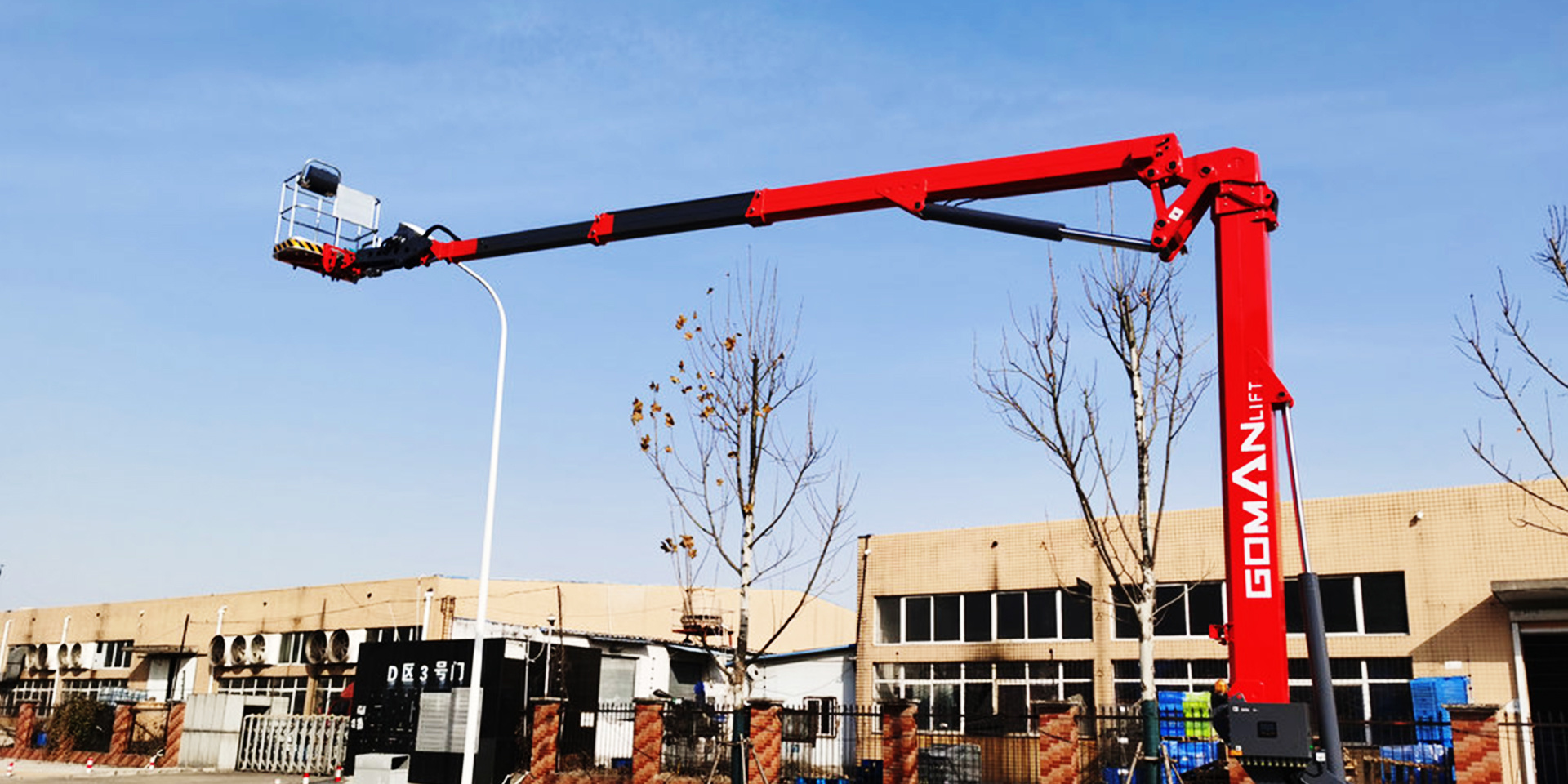
If you’ve ever searched for safe aerial equipment for narrow indoor spaces, finished floors, or uneven outdoor terrain, you’ve likely come across the term “aerial spider lift.” Many new buyers and site managers mix it up with standard boom lifts or scissor lifts, but spider lifts serve a very specific purpose that traditional aerial platforms simply cannot cover.
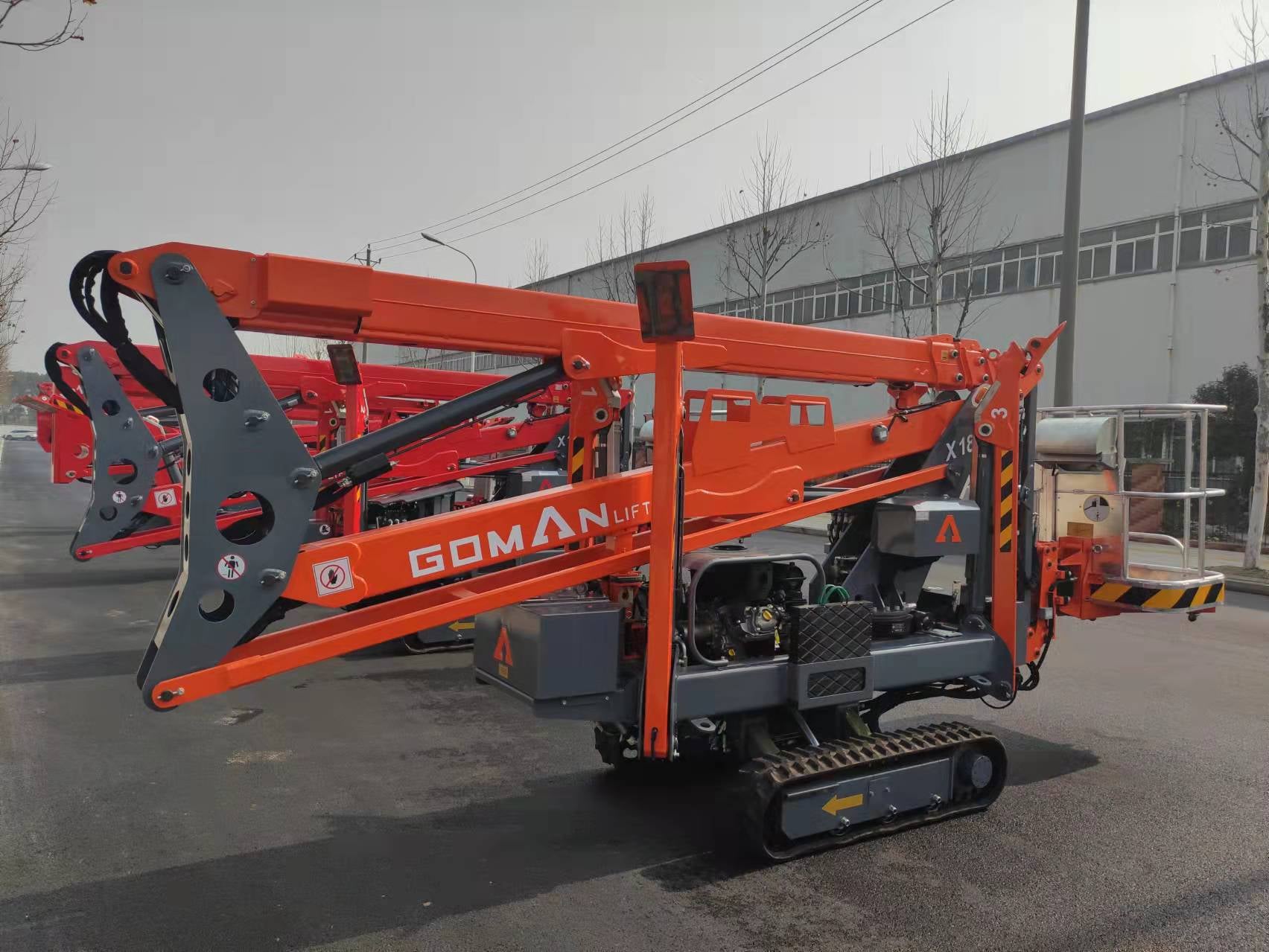
In short, an aerial spider lift is a compact, crawler-based aerial work platform designed for restricted-access, high-precision height jobs. It gets its name from its four independent hydraulic outriggers, which extend outward just like spider legs to create a stable, level working base on almost any surface.
How Does an Aerial Spider Lift Work?
Unlike heavy wheeled aerial equipment that requires flat, solid ground, a spider lift relies on two core designs to handle complex job sites: rubber crawler tracks and multi-point leveling outriggers.
The lightweight rubber tracks let the machine travel smoothly across delicate surfaces such as marble floors, wooden flooring, lawns, and paved tiles without leaving scratches or causing ground cracking. Once positioned, the four outriggers adjust individually to balance the unit on slopes, steps, and uneven ground. Only after full leveling can the boom extend for aerial operation, which greatly reduces tipping risks during indoor and outdoor high-altitude tasks.
Most aerial spider lifts adopt articulated or telescopic boom structures. This allows the platform to reach over walls, tree canopies, and building obstacles, delivering precise positioning that vertical-lift scissor lifts cannot achieve.
Key Benefits of Using an Aerial Spider Lift
From years of manufacturing and site feedback, we’ve summarized why professional contractors, property management teams, and power engineering crews increasingly choose spider lifts over conventional aerial equipment.
Extreme site accessibility. When fully folded, most spider lifts are narrow enough to pass through standard doorways, elevator cabins, and narrow walkways. This makes them the ideal choice for interior renovation, mall maintenance, and museum or historic building restoration where large machinery cannot enter.
Zero damage to finished ground. The low-pressure rubber track design eliminates floor damage complaints, which is a critical advantage for commercial indoor projects and residential community maintenance.
Strong terrain adaptability. Uneven ground, small slopes, and stepped terrain are no longer barriers. The independent outrigger leveling system ensures stable operation in complex outdoor environments, including mountain roadside maintenance and landscape pruning.
Obstacle-crossing performance. The flexible boom design allows workers to reach hidden elevation points, solving the blind-spot problem common with straight vertical lifting equipment.
Common Real-World Applications
Aerial spider lifts are widely used in scenarios that require flexibility, accuracy, and site protection. Typical jobs include:
Indoor ceiling maintenance, lighting replacement, and curtain wall cleaning for malls, hotels, and exhibition centers
Historic building renovation and antique structure repair, where ground and surface protection is mandatory
Municipal landscaping, tall tree pruning, and roadside facility maintenance
Residential community exterior wall repair and high-altitude property maintenance
Auxiliary high-altitude operations for power distribution projects, cooperating with insulated tracked lifts for complex-site power maintenance
Spider Lift vs. Scissor Lift vs. Regular Boom Lift: Clear Differences
To help you select the right machine faster, here is the most practical site-based comparison:
Scissor lifts excel at flat-ground vertical lifting and large-platform work. However, they cannot cross obstacles and cannot work safely on uneven terrain. They are suitable only for open, flat indoor and outdoor construction.
Traditional wheeled boom lifts offer large height and load capacity but feature large body sizes and heavy weight. They are designed for large-scale outdoor construction and cannot enter narrow indoor spaces or protect finished floors.
Aerial spider lifts fill the market gap for complex, narrow, and finished-site aerial work. They are the best option for refined, scattered, and obstacle-rich high-altitude projects.
Who Should Use an Aerial Spider Lift?
If your work involves indoor finishing maintenance, protected-ground construction, narrow-space renovation, or terrain-complex outdoor height work, a spider lift will significantly improve your construction efficiency while reducing site repair costs caused by ground damage. For teams that frequently switch between indoor and outdoor jobs, this machine delivers unmatched versatility compared with single-function aerial platforms.
An aerial spider lift is not a replacement for scissor lifts or boom lifts. Instead, it is a specialized aerial work solution built for the most restrictive and delicate job environments. Its unique combination of compact size, floor-friendly tracks, multi-terrain stability, and obstacle-crossing ability makes it an essential tool for modern commercial, municipal, and special engineering maintenance.
Previous:What Is a Spider Lift
Recommended News

Address : 188 Doubu Avenue, Hannan District, Wuhan 430090,China
Jack: 0086 18627769149(wechat/whatsApp)
Fendi: 0086 13339994983(wechat/whatsApp)
Chole: 0086 13886057623(wechat/whatsApp)
Ellen: 0086 13627238296 (wechat)
Tel: 0086 27 8485 5127
Fax : 0086 27 8485 5128
Email : sales@gomanlift.com