-
-
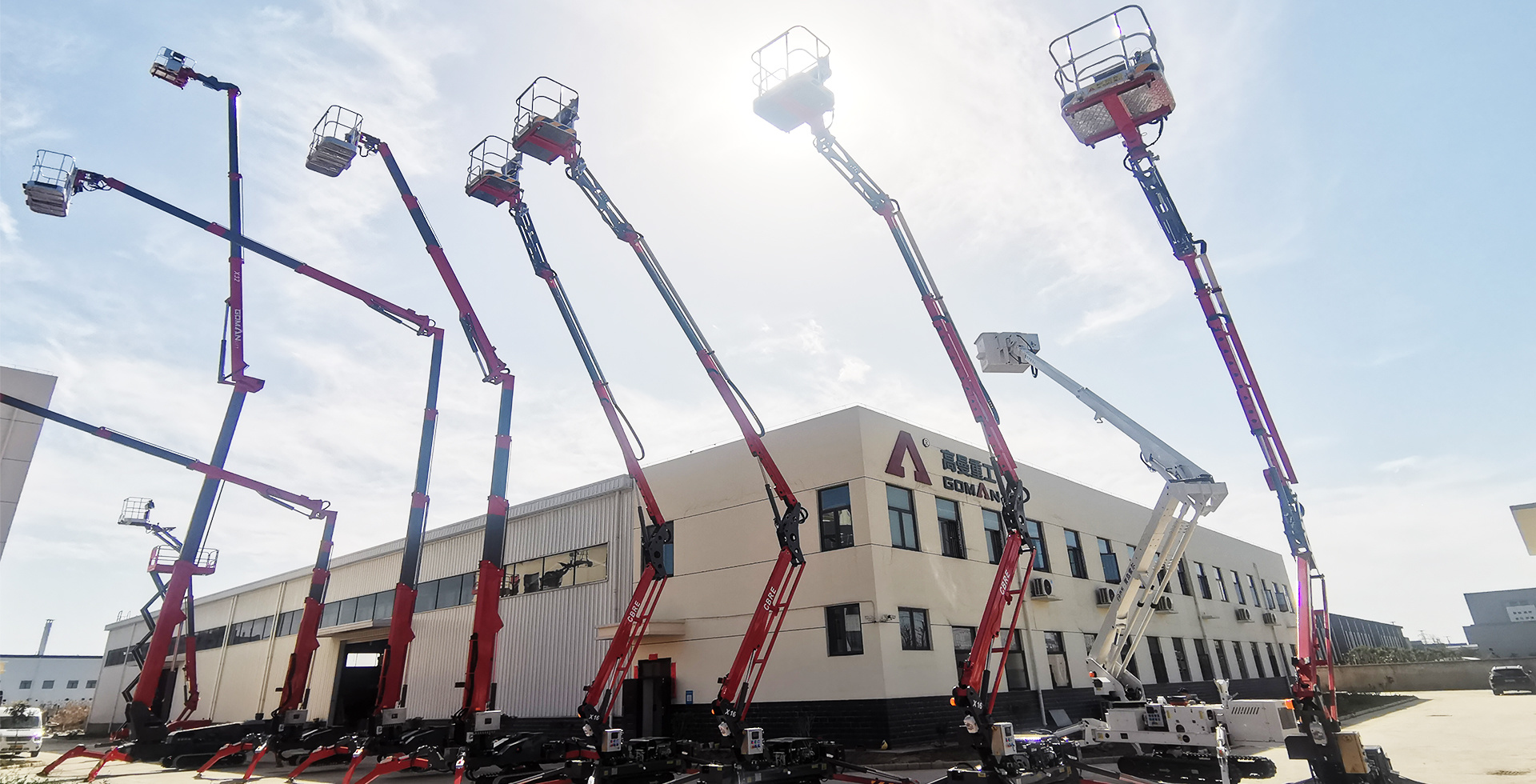
SolutionGoman Lift provides spider lifts, insulated bucket trucks and scissor lifts for power, commercial, transit and municipal aerial operations. Our project cases cover airports, high-speed stations, malls and substations with 500+ global clients.
-
-
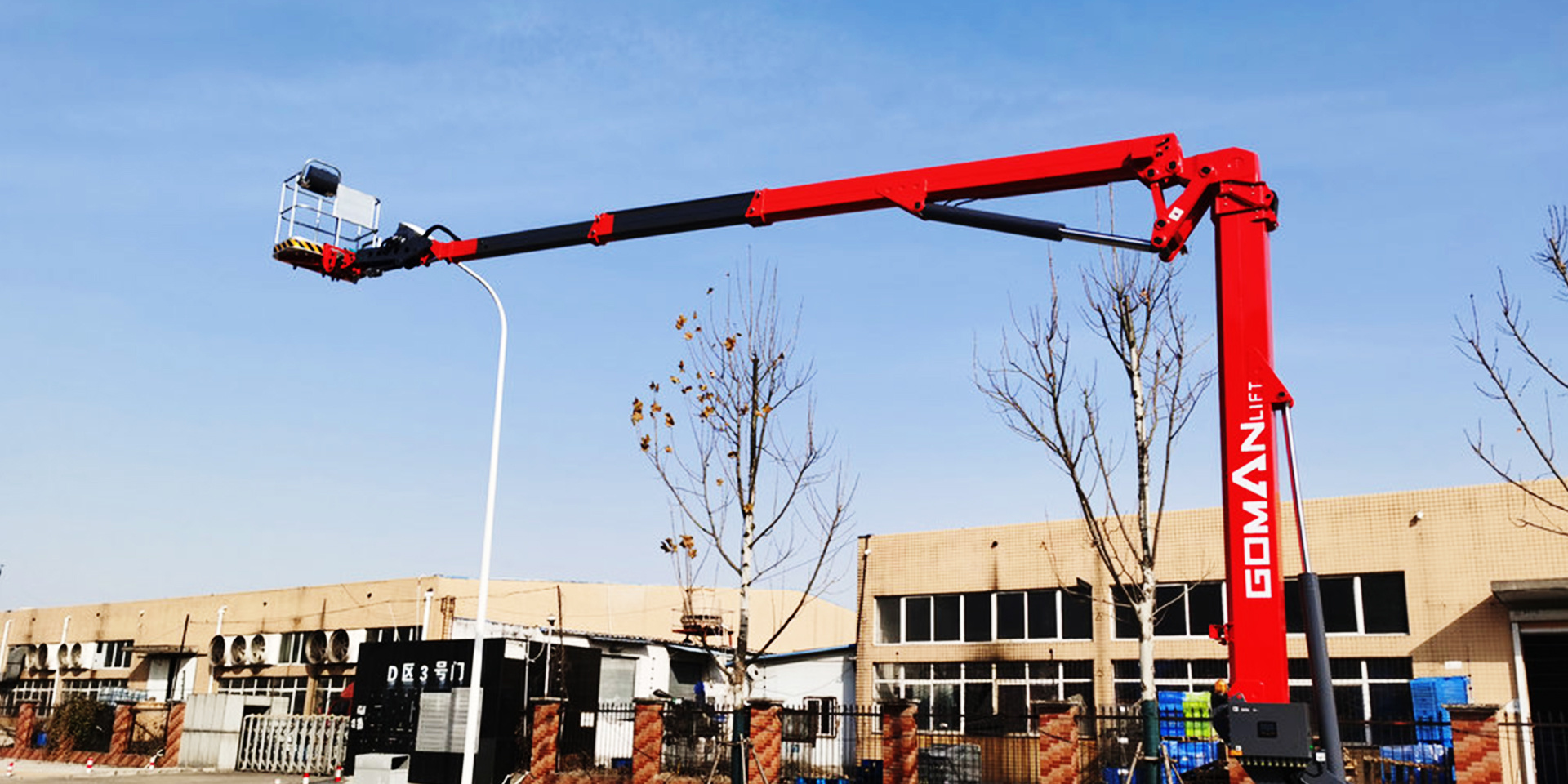
ProductGoman Lift manufactures full series aerial work platforms, including tracked spider lifts, articulating boom lifts, telescopic lifts, insulated tracked lifts for live-line power maintenance, scissor lifts and trailer-mounted lifts. Factory direct supply.
-
BlogGOMAN LIFT News Center focuses on sharing professional expertise about aerial work equipment, publishing product comparisons, performance analysis and working condition selection guides for spider lifts, Insulated Tracked Lifts, articulated & telescopic boom lifts and Scissor Lifts. It also features the latest GOMAN LIFT corporate updates, project delivery cases and cutting-edge industry trends.
-
RecruitIt is our consistent talent development philosophy to grow and progress together with employees. Adhering to people-oriented management, we unite staff with promising career prospects and ambitious goals. We uphold equality for all and care for every talent.
Consultation Hotline
Spider Lifts vs Standard Articulating Boom Lifts: Key Differences & Site Selection Guide
Time
2026-06-26
浏览量
680
Anyone working in high-rise facade maintenance, building renovation or landscape upkeep will struggle to pick between spider lifts and standard articulating boom lifts. Many contractors rent cheap boom lifts only to find they cannot pass narrow alleyways, scratch expensive flooring or ruin lawns, resulting in unexpected compensation fees. Others blindly hire spider lifts for wide open construction sites, only to discover lower work efficiency due to slow moving speed.
Most online content only introduces one type of equipment separately, with few practical side-by-side comparisons based on real job site conditions. This article skips redundant basic structural introductions, focusing on five core factors that directly affect construction cost and safety: site accessibility, ground adaptability, transportation, working efficiency and overall operation cost. After reading, you can quickly match the right lift to your project and avoid unnecessary expenses.
1. Chassis & Support Outriggers: The Fundamental Distinction
Many operators mistakenly believe the two lifts only differ in boom appearance, but their undercarriage and stabilizer systems are completely different, which determine which sites they can operate on.
Standard Wheeled Articulating Boom Lifts
They adopt solid rubber wheel chassis with integrated telescopic outriggers. All four outriggers extend and retract synchronously without independent height adjustment.
The ground surface must be fully leveled in advance. If there are steps, slopes or uneven patches, the safety lock will activate and stop boom lifting. These lifts are relatively heavy, with medium models weighing 5–6 tons, relying entirely on wheels to bear weight and creating high ground pressure.
Spider Lifts (Tracked Spider Aerial Work Platforms)
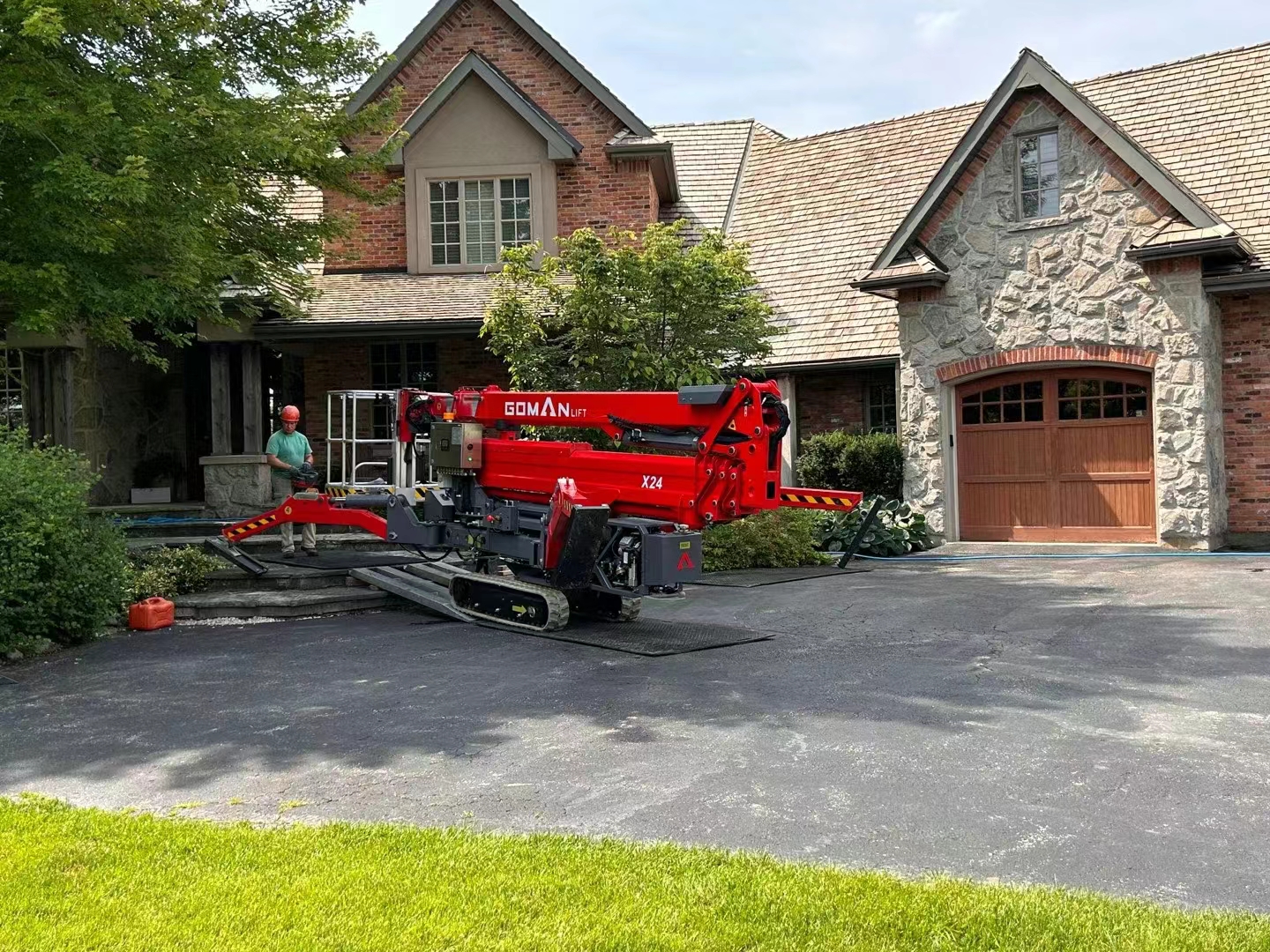
Equipped with wide non-marking rubber tracks and four independent hydraulic outriggers. Each outrigger can adjust height and extension separately. One-touch automatic leveling via remote control handles height gaps, small slopes and steps without laying steel plates manually.
With lightweight design, same-height spider lifts weigh nearly half of wheeled boom lifts. Tracks distribute weight evenly, enabling stable operation on both soft ground and finished pavement.
Brief summary: Standard boom lifts only work on flat hardened ground; spider lifts adapt to uneven terrain and soft surfaces.
2. Accessibility & Passing Capacity: Huge Gap in Narrow Spaces
Folded Body Width Difference
Conventional wheeled boom lifts have a folded width over 2 meters, making them unable to enter narrow lanes in old residential compounds, mall fire exits, indoor unit doors or underground parking lots. They are basically eliminated for all indoor projects.
Spider lifts fold down to a minimum width of 0.9 meters, with mainstream models ranging from 1.1 to 1.3 meters. They easily pass standard interior doors, corridors and scenic narrow trails. Compact mini spider lifts can even be transported inside passenger elevators, filling the gap that wheeled boom lifts cannot cover for enclosed indoor work.
Climbing & Obstacle-crossing Ability
Wheeled boom lifts have a maximum climbing gradient of around 10°, prone to slipping or sinking on gravel mountain roads and muddy ground after rain, severely limiting outdoor field applications.
Tracked spider lifts deliver powerful traction with a maximum climbing angle of 25°–30°, operating smoothly on forest trails, gentle slopes, steps and riverbank mud, giving them clear advantages for mountain landscape maintenance and suburban emergency repairs.
3. Ground Surface Protection: Critical Dividing Line for Indoor & High-end Projects
This feature is the top priority for shopping malls, office buildings and tourist scenic spots, as wrong equipment will trigger costly compensation disputes.
Standard Articulating Boom Lifts Heavy wheeled chassis generates high ground pressure. Wheels leave black tire marks or crack marble, epoxy and tile flooring. They are strictly forbidden on lawns and green belts, which would crush vegetation and churn mud. Protective steel plates must be laid before entry, adding extra labor and material costs.
Spider Lifts Flexible non-marking rubber tracks offer large contact area and low ground pressure, leaving zero scratches on stone flooring inside malls and hotels. No protective boards are required for lawns and sapling zones; the machine can drive away directly after work without damaging landscapes, making it the first choice for high-end indoor projects.
4. Transportation & Site Occupancy Differences
Standard Wheeled Articulating Boom Lifts
Wide and bulky, they require medium flatbed trailers for short-distance transport. Ample turning space is needed to move around job sites, and tight parking lots make U-turns difficult.
Their strength lies in fast self-propelled movement on flat open ground for short-distance relocation on large construction sites.
Spider Lifts
Ultra-compact when folded, they can be transported by pickup trucks or small light trailers to cut logistics costs. Slim body and small turning radius allow flexible navigation between factory machinery and narrow residential passages.
The downside is slow track travel speed; frequent long-distance relocation on large open construction sites takes more time than wheeled boom lifts.
Neither spider lifts nor standard articulating boom lifts are universally superior — the right choice depends entirely on your job site conditions. Wheeled boom lifts excel at fast relocation on flat open sites with lower base rental prices. Spider lifts stand out with slim body access, non-marking tracks and full-terrain adaptability, solving work restrictions in indoor venues, old residential compounds and mountain landscapes where standard lifts cannot enter.
Before renting or purchasing aerial equipment, measure entry passage width and inspect ground flatness on-site, then match the lift according to the above differences. This avoids project delays caused by inaccessible machinery and eliminates extra compensation fees for damaged ground or vegetation. Companies handling mixed indoor and outdoor high-altitude work can maintain both types of lifts to cover all construction scenarios.
Previous:Spider Lifts: Advantages, Applications, Buying Guide & Maintenance Tips
Recommended News

Address : 188 Doubu Avenue, Hannan District, Wuhan 430090,China
Jack: 0086 18627769149(wechat/whatsApp)
Fendi: 0086 13339994983(wechat/whatsApp)
Chole: 0086 13886057623(wechat/whatsApp)
Ellen: 0086 13627238296 (wechat)
Tel: 0086 27 8485 5127
Fax : 0086 27 8485 5128
Email : sales@gomanlift.com