
-
-
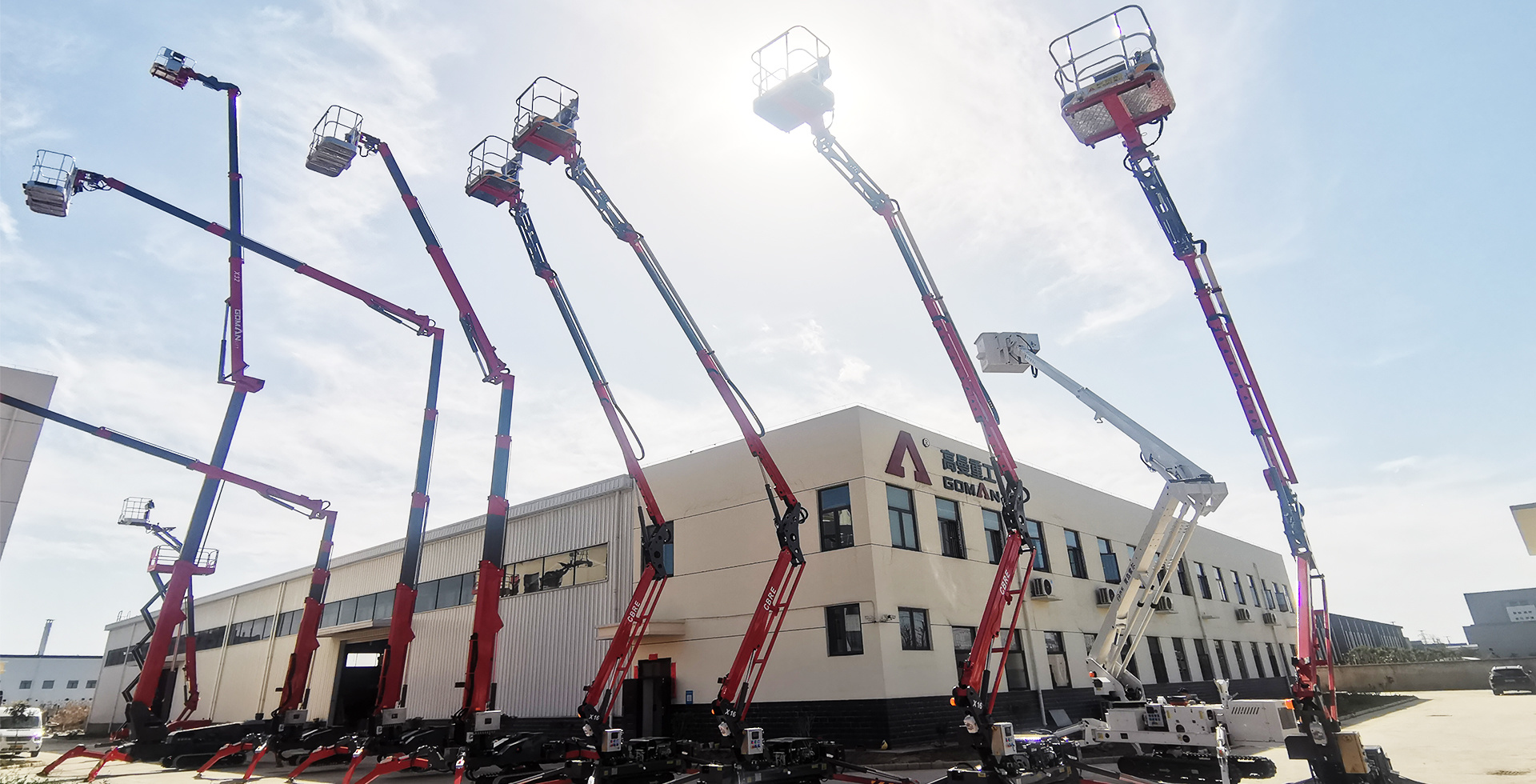
SolutionGoman Lift provides spider lifts, insulated bucket trucks and scissor lifts for power, commercial, transit and municipal aerial operations. Our project cases cover airports, high-speed stations, malls and substations with 500+ global clients.
-
-
ProductGoman Lift manufactures full series aerial work platforms, including tracked spider lifts, articulating boom lifts, telescopic lifts, insulated tracked lifts for live-line power maintenance, scissor lifts and trailer-mounted lifts. Factory direct supply.
-
BlogGOMAN LIFT News Center focuses on sharing professional expertise about aerial work equipment, publishing product comparisons, performance analysis and working condition selection guides for spider lifts, Insulated Tracked Lifts, articulated & telescopic boom lifts and Scissor Lifts. It also features the latest GOMAN LIFT corporate updates, project delivery cases and cutting-edge industry trends.
-
RecruitIt is our consistent talent development philosophy to grow and progress together with employees. Adhering to people-oriented management, we unite staff with promising career prospects and ambitious goals. We uphold equality for all and care for every talent.
Consultation Hotline
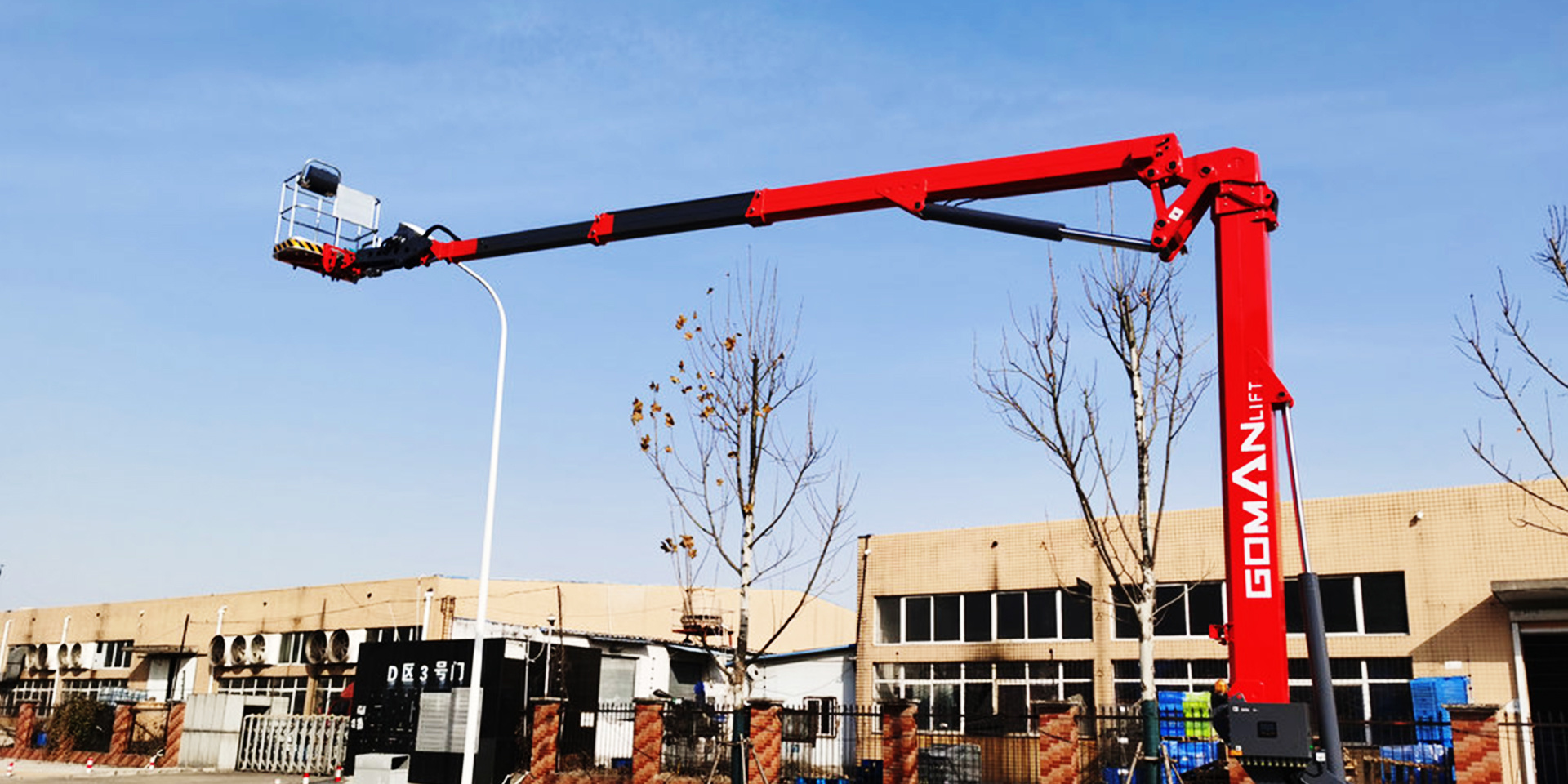
What Job Sites Are Spider Lifts Suitable For? On-site Selection Guide
Time
2026-06-26
浏览量
142
Years of aerial equipment rental and communication with construction teams have revealed a common mistake: many project managers only check working height before renting machines, ignoring actual site conditions. After delivery, they find the machine cannot enter the site or scratches floors leading to compensation, delaying construction schedules unnecessarily.
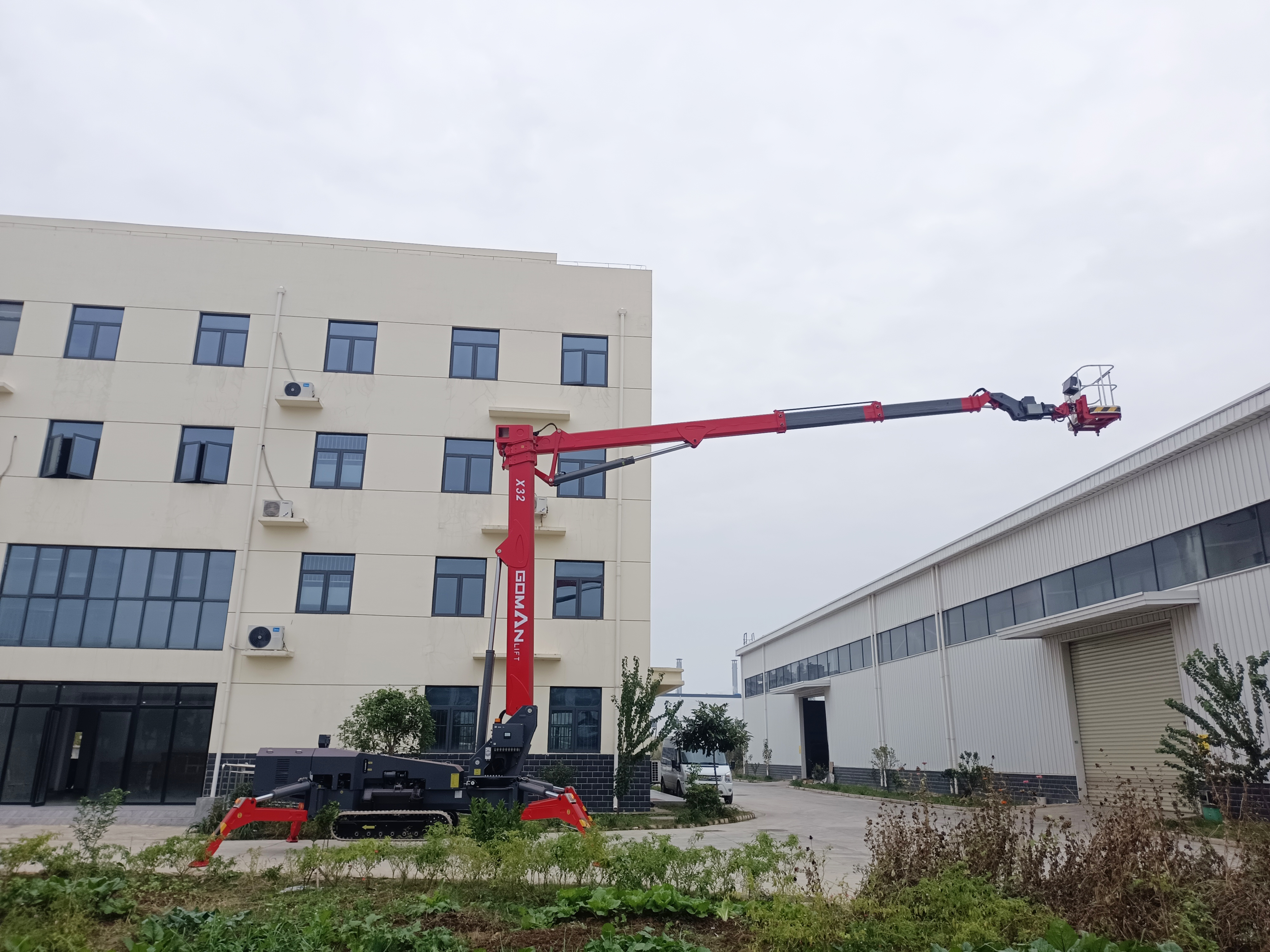
Wheeled articulated lifts and truck-mounted aerial lifts offer sufficient working height, yet they have strict limits on access width, ground bearing capacity and flatness. Scaffolds bring high labor costs, long assembly time and severe safety risks. In contrast, spider lifts feature slim folded dimensions, non-marking rubber tracks and independently adjustable outriggers, solving tough site problems that conventional lifts cannot handle.
This article avoids dull technical parameters. It classifies applicable construction sites with real engineering cases from across the country, and lists unsuitable working conditions as a reminder. Contractors, property maintenance crews, landscape workers and procurement staff can quickly match the right machine to their projects.
Enclosed Narrow Indoor Sites: Malls, Stadiums, Exhibition Halls & Office Buildings
This is the core application scenario where spider lifts can hardly be replaced by standard lifts.
Covered Site Types
Renovation inside shopping malls and commercial complexes; ceiling refurbishment of swimming stadiums, sports venues and exhibition centers; ceiling maintenance for hotel lobbies, theaters, museums and art galleries; pipeline servicing in underground parking lots and high-rise corridors of office buildings.
Site Pain Points & Spider Lift Advantages
Narrow access passages: Most venue entrances are only around 1m wide, while standard wheeled lifts exceed 2m when folded and cannot pass through. Compact spider lifts fold down to a minimum width of 0.89m, easily passing glass doors and fire exits. Mini models can even be transported inside passenger elevators without widening door frames.
Limited floor load-bearing capacity: Basement parking lots under stadiums and natatoriums have weak slab load capacity. The lightweight design of spider lifts creates far lower ground pressure than wheeled lifts, preventing cracks on slabs and stone tiles.
During the renovation of Xuzhou Olympic Natatorium, the venue entrance was merely 1m wide with restricted floor load. Three spider lifts completed roof rust removal without full scaffolding.
Construction without disrupting business operations: Electric spider lifts produce zero exhaust and low noise, allowing maintenance during business hours. Non-marking rubber tracks leave no black tire marks on marble and epoxy floors, eliminating large-scale protective steel plates and cutting labor & material costs.
Old Urban & Village Renovation Sites: Narrow Alley Exterior Wall Projects
Renovation of old towns is widely recognized as a tough high-altitude construction scenario, featuring narrow roads, crowded parking and bumpy ground inaccessible to truck-mounted and large articulated lifts.
Covered Site Types
External wall insulation, paint renovation and window replacement for aging residential buildings; storefront facade renovation and billboard installation/removal along old streets; maintenance of external water pipes and meter boxes in urban villages.
Site Pain Points & Spider Lift Advantages
Residential alleys generally measure 1–1.3m wide with parked cars on both sides, leaving little room for turning. Spider lifts have slim bodies and a small turning radius for flexible in-place rotation without clearing the entire alley.
Uneven ground with frequent steps and incomplete hardening. Four independent hydraulic outriggers adjust height separately with one-touch automatic leveling, adapting to height gaps up to 30cm without manual ground flattening or steel plates.
For an old residential renovation project in Guangzhou with a 1.2m-wide alley, a 27m spider lift accessed the site smoothly. It shortened the construction timeline for 10 apartment buildings by 2 days and cut scaffolding labor costs by half.
Cultural Tourism, Ancient Architecture & Landscape Maintenance Sites: Scenic Spots, Temples & Tree Pruning Projects
Cultural relics, urban parks and tourist attractions impose strict protection rules for pavements and vegetation. Heavy wheeled vehicles easily damage stone paving and saplings, resulting in costly compensation.
Covered Site Types
Restoration, roof repainting and wooden component refurbishment for ancient cities, temples and antique blocks; tall tree pruning, landscape light installation in urban parks and 4A/5A scenic areas; ancient famous tree protection and observation deck maintenance.
Site Pain Points & Spider Lift Advantages
Sites are paved with bluestones and antique bricks, surrounded by lawns and seedlings. Flexible rubber tracks avoid scratching stone surfaces or crushing greenery without protective boards. Most cultural heritage authorities explicitly require non-marking tracked aerial equipment for ancient building restoration and ban heavy wheeled vehicles that risk damaging historic pavements.
Scenic areas feature mountain dirt roads and gentle slopes that turn slippery after rain. Tracked undercarriages deliver strong traction for stable travel on slopes up to 25°, eliminating the need for dedicated construction access roads and preserving original landscapes.
Large Factories, Warehouses & Transportation Hub Sites: Compact Internal Zones with Dense Equipment
Steel plants, logistics warehouses, high-speed rail stations and airports are filled with dense columns and machinery, leaving scattered narrow passages inaccessible to conventional aerial lifts.
Covered Site Types
Steel structure welding, roof waterproofing and ventilation duct maintenance for new factories; high rack servicing in large logistics warehouses; curtain wall and ceiling upkeep for high-speed rail terminals, airport lounges and indoor stadiums; routine inspection of support frames and wiring in photovoltaic parks.
Site Pain Points & Spider Lift Advantages
Dense factory columns and large machinery create tight gaps that slim spider lifts navigate easily. The articulated boom with fly jib crosses steel frames and heavy units to reach precise overhead working positions.
For the rust removal and renovation project of the rain shelter at Tianhe Sports Center in Guangzhou, the grandstand floor had limited load capacity, making full scaffolding impossible. Five 33m spider lifts operated in assembly line to resolve large-scale steel structure high-altitude maintenance efficiently.
Suburban Rural & Mountain Complex Terrain Sites: Dirt Roads, Riverbanks & Soft Foundation Projects
Unpaved rural roads turn muddy after rainfall, with gravel hillsides and soft riverbank soil that trap wheeled lifts and halt construction progress.
Covered Site Types
Street lamp maintenance and roadside tree pruning in rural zones; billboard and surveillance camera installation on mountain slopes; exterior renovation of suburban factories and inspection of field supporting facilities; minor landscape repairs on riverbanks.
Site Pain Points & Spider Lift Advantages
Tracked undercarriages offer strong off-road traction to avoid slipping or sinking on gravel and mud. Outriggers distribute weight evenly to prevent tipping on riverbanks and soft soil. Diesel-powered spider lifts operate independently without external power cables for remote field sites, and can be transported short-distance by pickup trucks for fast emergency dispatch.
Municipal Minor Emergency Repair Sites: Post-typhoon & Heavy Rain Road Restoration
Heavy rain and typhoons leave muddy, damaged pavement impassable for large aerial machinery, requiring lightweight equipment for rapid emergency repairs.
Covered Site Types
Street lamp and landscape lighting restoration after rainstorms; trimming & clearance of fallen roadside trees; minor repairs of bridge guardrails and landscape decorations.
Site Pain Points & Spider Lift Advantages
Lightweight body allows transport via light flatbed trailers or pickup trucks for fast emergency deployment. Automatic leveling adapts to bumpy damaged roads, eliminating waiting time for pavement repairs and shortening overall maintenance cycles.
Spider lifts are not universal aerial equipment, yet they deliver irreplaceable performance against four core site pain points: narrow access passages, fragile ground surfaces, uneven terrain and demand for quiet, eco-friendly indoor construction.
Before rental or purchase, measure entry passage width, inspect ground material and flatness on-site, then select the matching model according to the applicable site types above. Choose electric spider lifts for long-term indoor maintenance, and diesel or hybrid dual-power models for mountain and field sites. This prevents construction delays caused by inaccessible machinery and cuts hidden costs including ground damage compensation and repeated transportation fees.
Previous:What Job Sites Are Spider Lifts Suitable For? Complete Guide for Rental & Purchase
Recommended News

Address : 188 Doubu Avenue, Hannan District, Wuhan 430090,China
Jack: 0086 18627769149(wechat/whatsApp)
Fendi: 0086 13339994983(wechat/whatsApp)
Chole: 0086 13886057623(wechat/whatsApp)
Ellen: 0086 13627238296 (wechat)
Tel: 0086 27 8485 5127
Fax : 0086 27 8485 5128
Email : sales@gomanlift.com