-
-
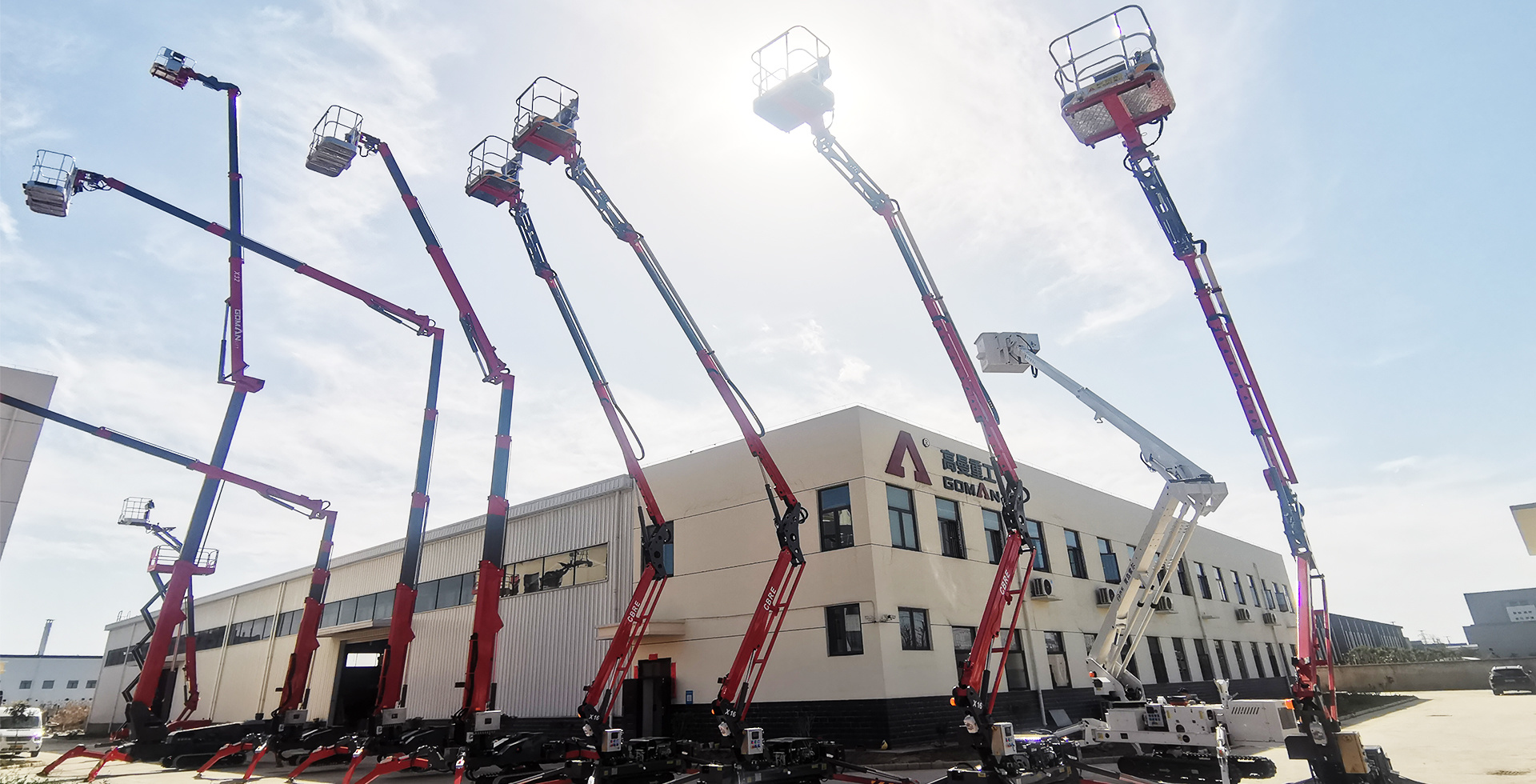
SolutionGoman Lift provides spider lifts, insulated bucket trucks and scissor lifts for power, commercial, transit and municipal aerial operations. Our project cases cover airports, high-speed stations, malls and substations with 500+ global clients.
-
-
ProductGoman Lift manufactures full series aerial work platforms, including tracked spider lifts, articulating boom lifts, telescopic lifts, insulated tracked lifts for live-line power maintenance, scissor lifts and trailer-mounted lifts. Factory direct supply.
-
BlogGOMAN LIFT News Center focuses on sharing professional expertise about aerial work equipment, publishing product comparisons, performance analysis and working condition selection guides for spider lifts, Insulated Tracked Lifts, articulated & telescopic boom lifts and Scissor Lifts. It also features the latest GOMAN LIFT corporate updates, project delivery cases and cutting-edge industry trends.
-
RecruitIt is our consistent talent development philosophy to grow and progress together with employees. Adhering to people-oriented management, we unite staff with promising career prospects and ambitious goals. We uphold equality for all and care for every talent.
Consultation Hotline
Advantages and Application Scenarios of Spider Lifts (Aerial Work Platforms)
Time
2026-06-25
浏览量
140
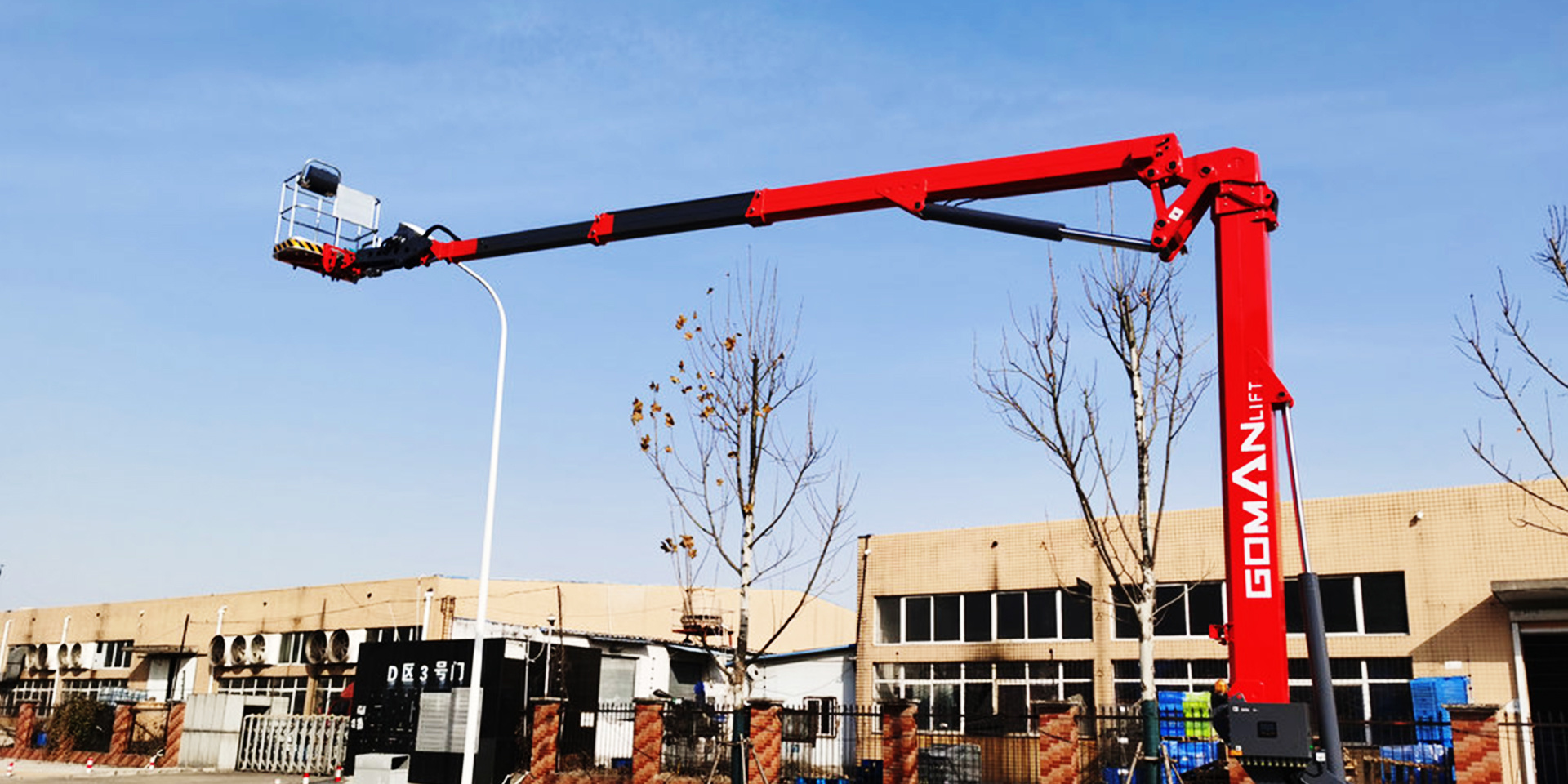
Traditional scaffolding and large straight boom lifts hit countless site limits during high-altitude jobs. Spider lift aerial work platforms feature compact frames, rubber crawler tracks and stable independent outriggers, ideal for tight, complex job sites across construction, venue maintenance, tree care and factory inspection work.
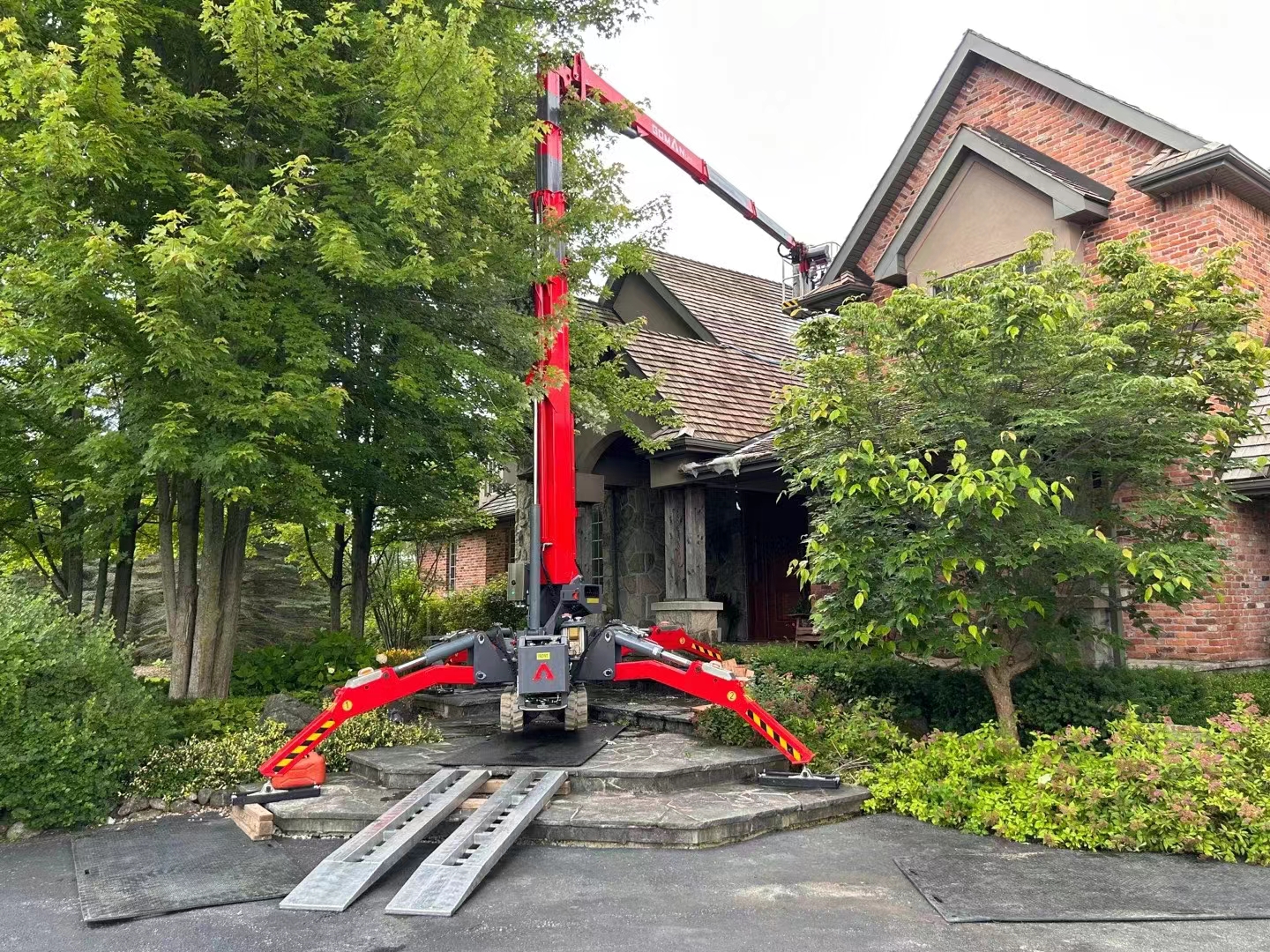
In high-level construction work, traditional scaffolding and large straight boom aerial lifts come with a long list of frustrating on-site drawbacks. They are highly restricted by site space, take massive time to assemble and dismantle, struggle to move through narrow passages, and carry relatively high safety risks. As a reliable alternative, spider lift aerial work platforms stand out with compact body size, tracked travel system, stable multi-point outrigger support and universal site compatibility. They have become the go-to high-access equipment for confined and complicated work zones, widely adopted in building construction, commercial venue maintenance, arboriculture trimming, factory equipment overhaul and more sectors.
What Exactly Is a Spider Lift Aerial Work Platform?
Spider lifts are also commonly named spider aerial work platforms or crawler spider elevators. They are mobile lifting machines specially developed for high-altitude tasks in narrow and complicated spaces. The equipment gets its well-known name from its four hydraulic support legs, which stretch out like spider limbs to deliver balanced, solid support on uneven ground.
Unlike conventional aerial lifting equipment, spider lifts adopt lightweight crawler chassis, foldable main frames and separate hydraulic outriggers. This unique design delivers flexible movement, precise lifting and full-range stability all at once. No permanent installation is required; operators can relocate the machine freely and finish setup within minutes. They fill the major gaps of large aerial lifts that fail to enter indoor areas, narrow walkways or soft ground surfaces. For small and medium high-access projects, spider lifts strike an ideal balance between practical performance and long-term cost efficiency.
Core Advantages of Spider Lift Aerial Work Platforms
Based on real construction demands and years of field feedback from industry operators, spider crawler lifts hold clear upper hands over traditional lifting gear, perfectly catering to delicate, complicated and space-limited construction tasks. Below are their standout strengths seen on every job site:
Outstanding Site Compatibility & Unrestricted Access
The whole body of a spider lift is engineered compact with a full foldable structure, which drastically cuts its overall footprint after retraction. It can smoothly pass through indoor corridors, passenger elevators, stairwells, standard single doors and narrow residential lanes without any disassembly.
The wide rubber crawler tracks spread the machine’s weight evenly to cut ground pressure to a minimum. Operators can drive the unit steadily across marble flooring, wooden floors, lawns, event red carpets, soft mud and bumpy unfinished construction ground. The tracks leave zero scratches or indentations, and there is no slipping or sinking risk. This makes spider lifts the top pick for all indoor maintenance jobs.
Four Independent Outriggers for Superior Operation Stability
Every spider lift is fitted with four separate hydraulic auto-leveling outriggers. Each leg adjusts height independently to balance the machine automatically according to ground slopes and height differences. Even on stepped ground or sloped terrain, the platform stays fully horizontal with solid support.
The machine maintains a low overall center of gravity during operation for strong anti-tipping performance. A full set of built-in safety systems works alongside the outrigger structure, including tilt angle protection, overload alarm and emergency stop function. These features greatly reduce hazards such as platform tilting or falling caused by overloading, fully meeting standard safety codes for elevated work.
Precise, Flexible Lifting with Wide Working Coverage
Most spider lift models offer working heights ranging from 8 meters up to 58 meters, covering low, medium and high-rise elevated work requirements. Equipped with a hydraulic multi-section telescopic boom, the machine supports full 360-degree rotation and tiny fine-tuning of lifting height. The work basket can get extremely close to walls, ceiling panels and building beams with zero blind working zones. Operators can carry out delicate tasks including surface repair, welding, glass cleaning and equipment inspection with far higher precision than standard lifting equipment.
Fast On-Site Deployment to Cut Total Construction Costs
Traditional scaffolding demands dozens of man-hours to put up and take down, leading to extended project timelines and extra labor costs. Large straight boom lifts also require complicated transport preparation and spacious ground for setup.
In contrast, spider lifts are self-propelled and need zero pre-installation work. Crews can unfold the outriggers and start working right after arrival, then fold the unit quickly for relocation once work wraps up. A single operator can handle the whole machine independently, slashing labor expenses and shortening construction schedules. Additionally, spider lifts consume less fuel or electricity, break down less frequently and require simple routine maintenance, bringing great long-term value for long-running construction projects.
Multiple Power Options to Fit All Working Environments
Buyers can choose from pure electric, diesel or bi-energy hybrid power configurations for spider lifts:
Battery electric mode generates zero exhaust emissions and runs at low noise levels, suitable for enclosed quiet spaces such as shopping malls, hotels, office towers and indoor stadiums.
Diesel power delivers strong torque and long continuous runtime, perfect for outdoor remote sites without power outlets and long-term open-air construction.
This dual-power design allows one single machine to handle both indoor and outdoor work scenarios without equipment replacement.
Main Application Scenarios for Spider Lift Aerial Work Platforms
Thanks to their unmatched adaptability to diverse site conditions, spider crawler lifts are widely used across commercial service, construction, municipal engineering and landscaping industries. Key application cases are listed below:
Indoor Venue Maintenance
Stadiums, exhibition halls, theatres, shopping malls, hotels and office buildings rely on spider lifts for ceiling renovation, stage lighting and speaker installation, glass curtain wall cleaning and fire protection equipment inspection. The non-marking tracks and quiet electric drive avoid floor damage and indoor air pollution.
Building Construction & Renovation
Interior fit-out works, exterior wall repair, beam and column construction, factory frame assembly and overhead pipeline laying all benefit from spider lifts. The compact size lets them access tight construction zones and indoor high-level working spots that big boom lifts cannot reach.
Municipal & Landscaping Operations
Tree pruning along urban roads, streetlight maintenance, surveillance camera installation, bridge inspection and tunnel upkeep are common municipal tasks for spider lifts. The crawler system moves safely across sidewalks, lawns and uneven sloped ground.
Specialized High-Access Jobs
Heritage building restoration, scenic spot facility maintenance, airport and high-speed railway station inspection, and power substation equipment servicing all depend on spider lifts. The flexible narrow frame protects original buildings and infrastructure while keeping operators safe at height.
Key Factors to Consider When Purchasing a Spider Lift Aerial Work Platform
A wide range of spider lift models with varied specifications are available on the market. Choosing an ill-fitted unit will slow down work progress and waste investment budgets. Operators and fleet owners need to match equipment specs to their regular job site conditions, following these core purchasing tips:
Match Working Height & Platform Load Capacity
Select the machine’s maximum working height based on your daily project demands. Compact 8–20m spider lifts fit regular indoor maintenance work, while 22–58m high-reach models serve outdoor construction and bridge inspection jobs.
Also check the rated platform load. Standard units support 200kg to 300kg, enough for two workers plus handheld tools. Heavy-duty spider lift variants are available if you need to carry bulky construction gear.
Pick Power Mode According to Your Working Environment
Opt for fully electric spider lifts if you mainly work indoors or in enclosed quiet spaces, as they meet strict indoor emission and noise limits. Diesel-powered units are better for remote outdoor sites without power supply. Bi-energy hybrid spider lifts are the most cost-effective pick for teams that split work between indoor and outdoor locations.
Check Overall Body Dimensions & Passage Performance
For indoor jobs, elevator transport and narrow doorway access, pay close attention to the machine’s folded length, width and height. Prioritize lightweight, fully foldable compact models that can squeeze through tight passages without disassembly. If you only work on wide open outdoor sites, standard full-size spider lifts will deliver stable heavy-duty performance.
Verify Complete Safety Configurations & Official Certifications
Qualified spider lifts must come with full standard safety fittings: auto-leveling system, overload protection, tilt angle alarm, emergency stop button, manual emergency lowering device, anti-slip platform surface and safety guardrails.
More importantly, confirm the equipment holds official special manufacturing equipment licenses and valid inspection reports. Certified machines keep your construction fully compliant and eliminate hidden safety risks during project acceptance checks.
Closing Summary on Spider Lift Advantages
Spider lift aerial work platforms resolve nearly all major pain points of traditional high-access equipment, with broad site compatibility, reliable safety performance, flexible lifting operation, energy-efficient running and lower overall operating costs. They have become essential lifting machinery for confined and complex indoor & outdoor construction projects, covering maintenance, building renovation, municipal engineering, landscaping and heritage restoration sectors.
When shopping for a spider lift, do not blindly chase over-sized or over-spec models. Instead, match the unit’s working height, power system and chassis size to your typical site environment. Prioritize certified machines with complete safety fittings and suitable power modes. This matching strategy will guarantee stable job site safety, boost construction efficiency and control your long-term operational costs for compliant, productive high-altitude work.
Previous:How Wide Are Spider Lift Applications? All Industries & Real-World Job Site Use Cases
Recommended News

Address : 188 Doubu Avenue, Hannan District, Wuhan 430090,China
Jack: 0086 18627769149(wechat/whatsApp)
Fendi: 0086 13339994983(wechat/whatsApp)
Chole: 0086 13886057623(wechat/whatsApp)
Ellen: 0086 13627238296 (wechat)
Tel: 0086 27 8485 5127
Fax : 0086 27 8485 5128
Email : sales@gomanlift.com