
-
-
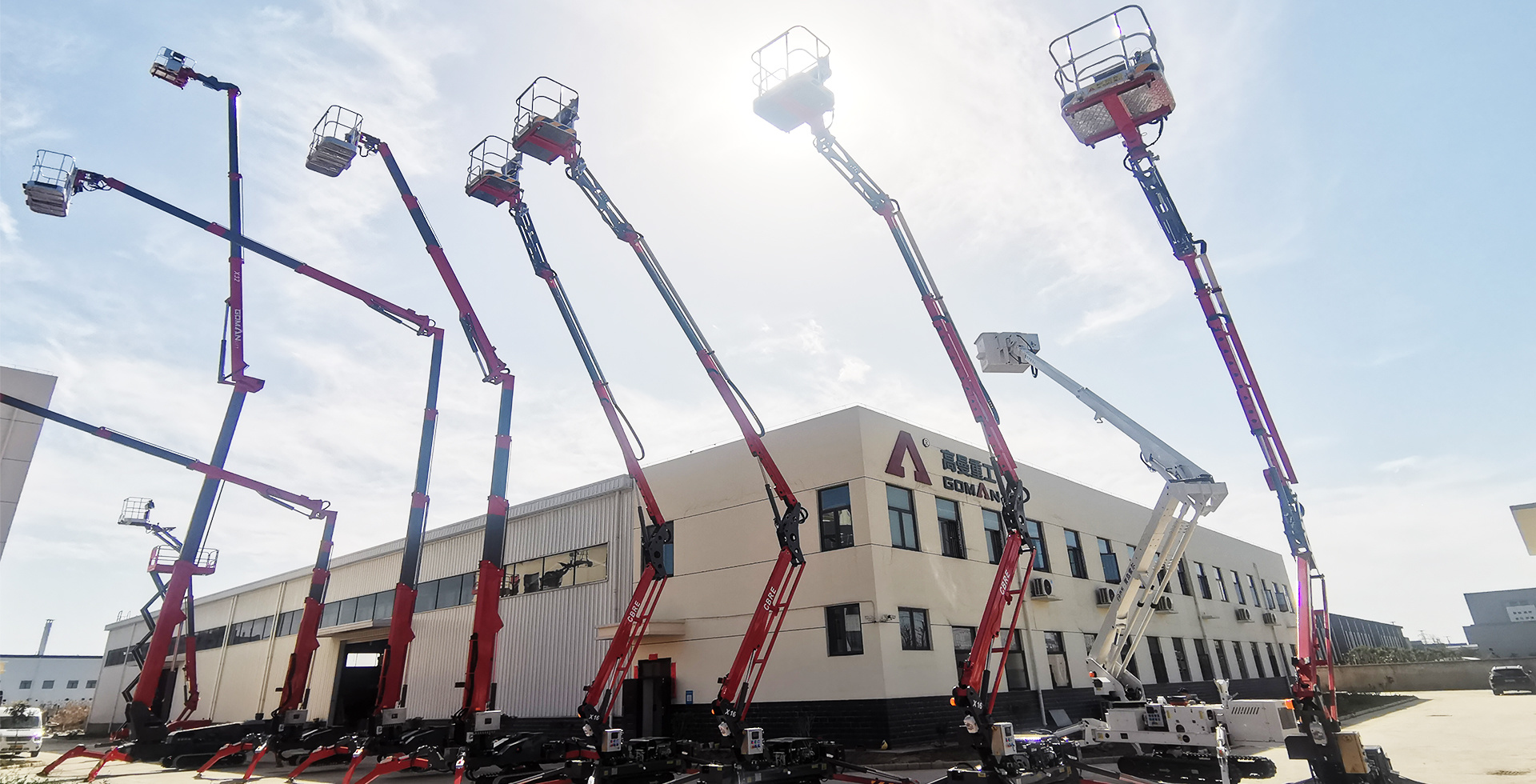
SolutionGoman Lift provides spider lifts, insulated bucket trucks and scissor lifts for power, commercial, transit and municipal aerial operations. Our project cases cover airports, high-speed stations, malls and substations with 500+ global clients.
-
-
ProductGoman Lift manufactures full series aerial work platforms, including tracked spider lifts, articulating boom lifts, telescopic lifts, insulated tracked lifts for live-line power maintenance, scissor lifts and trailer-mounted lifts. Factory direct supply.
-
BlogGOMAN LIFT News Center focuses on sharing professional expertise about aerial work equipment, publishing product comparisons, performance analysis and working condition selection guides for spider lifts, Insulated Tracked Lifts, articulated & telescopic boom lifts and Scissor Lifts. It also features the latest GOMAN LIFT corporate updates, project delivery cases and cutting-edge industry trends.
-
RecruitIt is our consistent talent development philosophy to grow and progress together with employees. Adhering to people-oriented management, we unite staff with promising career prospects and ambitious goals. We uphold equality for all and care for every talent.
Consultation Hotline
How Wide Are Spider Lift Applications? All Industries & Real-World Job Site Use Cases
Time
2026-06-25
浏览量
129
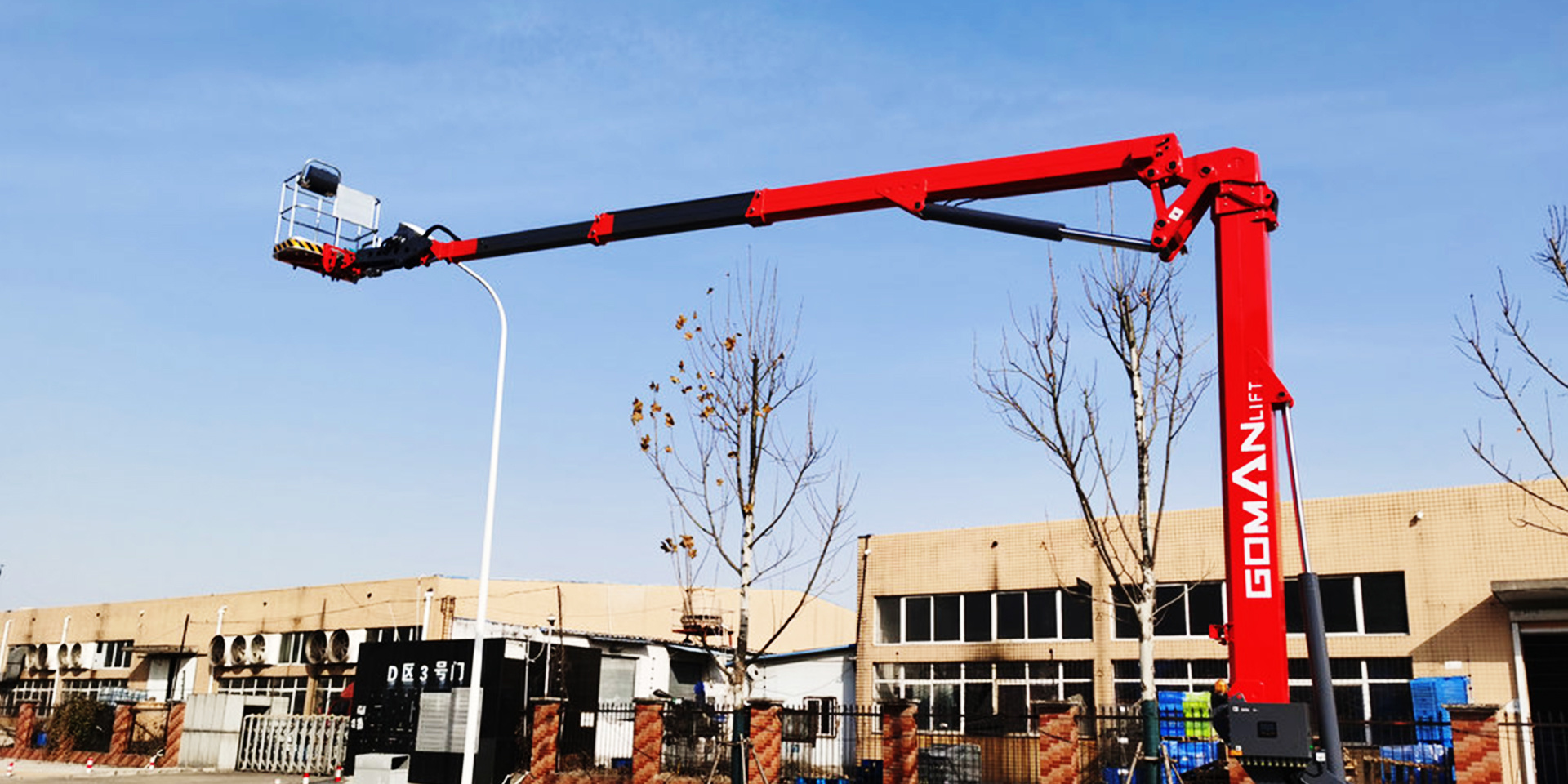
If you’ve spent years renting wheeled boom lifts or hauling heavy scaffolding for tight-access jobs, you’ve likely heard contractors rave about how spider lifts fit seemingly every high-access project. I’ve managed aerial equipment rentals for over 7 years, and one thing stays consistent: no other MEWP matches the spider lift’s cross-industry flexibility.
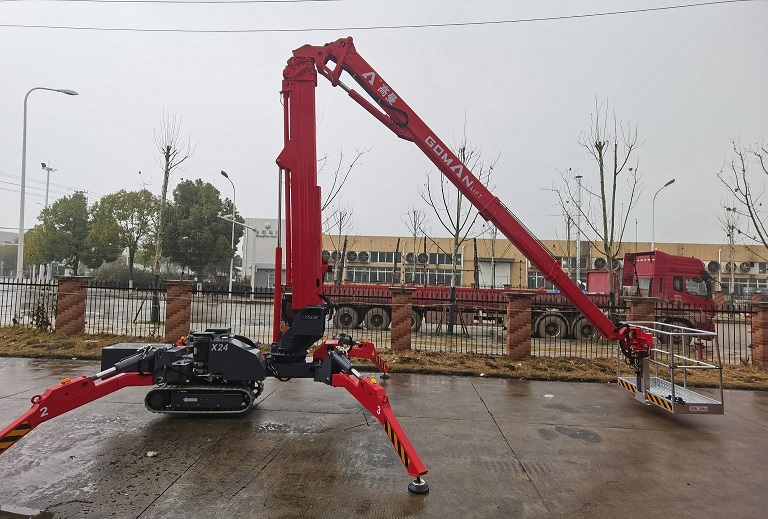
Standard scissor and full-size boom lifts are limited to flat, wide construction yards. Scaffolding takes hours to assemble and tears up finished floors. But compact tracked spider lifts combine narrow folded frames, non-marking rubber tracks, independent adjustable outriggers and bi-energy power modes. This unique combo lets them switch seamlessly between indoor renovation, sloped outdoor landscaping, historic stone restoration, electrical substation maintenance and stadium event rigging — jobs that used to require two or three separate pieces of equipment.
A lot of fleet buyers only associate spider lifts with tree trimming or mall upkeep, but their usable scope stretches far wider than most people realize. Below I break down every major industry relying on spider lifts today, complete with real on-site pain points each machine solves, plus a quick breakdown of which spider lift models work best for each type of work.
Core Design Traits That Make Spider Lifts Suitable For Hundreds Of Job Types
Before jumping into specific applications, it helps to understand why this machine fits so many tricky sites — these four design features unlock its massive versatility:
Ultra-narrow folded width (0.78–0.95m)
Fits through standard single interior doors, hotel service corridors, garden gates and passenger elevators without disassembly. No other boom lift can navigate tight interior layouts without partial teardown.
Low ground pressure rubber tracks
Weight spreads evenly across surfaces, so they roll over marble, hardwood, historic stone, manicured lawns and thin rooftop paving without scratches, cracks or ruts.
Four independent hydraulic outriggers
Each leg adjusts separately to level the unit on slopes up to 25°, uneven rock, small steps and tiered terraces — a feature traditional wheeled lifts cannot replicate.
Dual power operation (battery electric + low-emission diesel)
Zero-fume silent electric mode for indoor facilities; diesel backup for off-grid outdoor sites with no power supply. One machine handles both indoor and outdoor shifts on the same project.
These small design details are what let spider lifts move from a museum restoration job in the morning to a residential tree trimming site in the afternoon, with zero extra setup modifications.
Indoor Facility Maintenance & Commercial Property Management (Most Common Spider Lift Use Case)
Shopping Malls, Airports, Hotels & Convention Centers
Large public commercial spaces are where spider lifts have become standard rental gear for maintenance teams.
Mall crews need to reach high atrium ceilings, suspended signage, skylights and overhead HVAC ducts while moving through narrow retail aisles between storefronts. Heavy wheeled boom lifts block walkways and risk scratching polished tile flooring, while scaffolding disrupts customer traffic for days. A compact electric spider lift drives between shopfronts after operating hours, replaces broken light fixtures, cleans glass railings and inspects fire sprinklers without closing entire zones.
Airport terminals, hotel lobbies and exhibition halls share identical pain points: high vaulted ceilings, tight service passages and strict no-damage floor rules. Many airport maintenance fleets now keep 22m–30m spider lifts on standby for window washing, security camera installation and ceiling panel repairs.
Hospitals, Schools, Theaters & Museums
These sites carry extra strict surface and emission rules that rule out diesel aerial lifts entirely.
Hospitals require quiet, fume-free machinery for ceiling pipe repairs and medical light fixture swaps; battery-powered spider lifts meet hospital indoor air safety standards. Historic theaters and art museums have fragile wooden floors, antique stone staircases and priceless wall displays — lightweight tracked spider lifts avoid permanent surface damage that would trigger costly restoration bills.
School districts frequently rent small 12m–18m spider lifts to repaint gymnasium ceilings, fix auditorium stage rigging and service overhead gym equipment without blocking student walkways.
Warehouses, Manufacturing Plants & Industrial Factories
Large distribution centers and production facilities rely on spider lifts for overhead equipment maintenance. Crews use them to service high conveyor systems, replace warehouse rack lighting, inspect overhead electrical cable trays and repair suspended ventilation ductwork.
Many factories have narrow aisles between production machinery that wide wheeled lifts cannot enter; spider lifts squeeze through gaps between assembly lines and reach equipment tops that scissor lifts cannot access horizontally. Their low weight also lets them operate safely on mezzanine floors with strict load limits.
Heritage Restoration, Churches & Historic Building Renovation
This niche is where spider lifts deliver unmatched value — traditional aerial equipment almost always gets rejected by heritage site inspectors.
Old churches, cathedrals, listed townhouses and heritage monuments feature narrow stone entry doorways, sloped mossy courtyards, fragile original flagstone flooring and steep tiered rooflines. Last year I supported a restoration crew renovating a 1700s stone church in Belgium; their initial 24m wheeled boom lift failed site safety checks immediately: its 2.2m width couldn’t pass the church’s 0.9m sandstone main door, and heavy wheels would have sunk into the uneven courtyard.
After switching to a 24m bi-energy spider lift, the crew completed facade stone repair, stained-glass window restoration and steep roof tile replacement in half the expected time. Independent outriggers stabilized the machine on a 19-degree sloped stone terrace, and non-marking tracks left zero damage to protected heritage surfaces.
Museums, old government halls and historic castles all follow the same strict preservation guidelines, making compact tracked spider lifts the only approved aerial access tool for most restoration contractors.
Arboriculture, Landscaping & Residential Tree Care
Tree surgeons and landscape companies represent the biggest private rental customer group for spider lifts, and it’s easy to see why.
Residential yards rarely have wide open space for standard boom lifts. Small garden gates, sloped lawns, patio stonework and tight space between houses eliminate most wheeled aerial platforms. Spider lifts roll through standard backyard gates, travel across soft grass without digging ruts, and adjust outriggers to level on uneven garden slopes.
Common tree care jobs for spider lifts include:
Tall canopy pruning and dead branch removal on mature residential trees
Storm damage cleanup after wind or ice storms
Close-up tree health inspections for disease and pest control
High garden lighting installation and decorative tree trimming
Line clearance work near overhead power lines (insulated spider lift variants available)
Large public parks and botanical gardens also rent spider lifts year-round to maintain mature specimen trees across uneven, landscaped terrain without ruining manicured turf and flower beds.
Construction, Renovation & Exterior Façade Work
Spider lifts fill critical gaps on mid-rise renovation and light construction sites where standard lifts fall short.
For residential and boutique commercial new builds, crews use spider lifts to install exterior cladding, fit high windows, paint multi-story facades and mount exterior signage. On urban infill construction jobs with narrow side yard access, heavy flatbed-delivered boom lifts cannot reach rear building walls, while towable spider lifts hauled on small trailers fit down alleyways.
Interior fit-out teams for luxury apartments, office towers and retail fit-outs depend on electric spider lifts for ceiling drywall installation, high paint finishing and overhead fixture mounting. Unlike scaffolding, spider lifts set up in minutes and reposition around internal walls and columns without full disassembly.
It’s worth noting spider lifts don’t replace heavy scissor lifts for large open construction lots requiring maximum material load capacity — but for every tight, sloped or indoor construction phase, they outperform all competing MEWPs.
Utilities, Electrical Substations & Telecommunications Maintenance
Public utility contractors have rapidly expanded spider lift fleets over the past five years, especially insulated track spider lift models built for power line work.
Electrical teams use them to access transformers inside compact substations, repair streetlights on narrow residential streets, and run cable maintenance along sloped rural utility corridors. The narrow chassis navigates tight fencing gaps around substation equipment that bucket trucks cannot enter.
Telecom technicians rely on spider lifts for cell tower base maintenance, overhead cable routing and rooftop antenna installation on uneven commercial rooftops. Lightweight tracked units safely operate on aging rooftop membrane surfaces that heavy wheeled lifts would tear or puncture.
Municipal road crews also rent spider lifts for traffic sign replacement, bridge underpass inspections and noise barrier maintenance on narrow urban road verges.
Events, Stadiums, Concert & Exhibition Setup
Live event production teams rank spider lifts as one of their most essential pieces of temporary rigging gear.
Indoor stadiums, concert halls and large convention centers feature high, complex ceiling rigging for stage lighting, speaker arrays, LED screens and event banners. Spider lifts drive through venue backstage corridors, set up on tiered stadium seating slabs and reach overhead rig points that tall scissor lifts cannot wrap around.
Outdoor festivals, outdoor wedding venues and seasonal amusement parks also use spider lifts to mount decorative lighting, hang signage and inspect ride structures across uneven park terrain. Post-event teardown speeds up drastically too — spider lifts fold narrow enough to roll straight through venue exit doors, no partial breakdown required.
Specialized Niche Applications Many Contractors Overlook
Most buyers only learn about these use cases after renting a spider lift once and realizing its hidden versatility:
Solar panel installation & rooftop solar maintenance
Light weight protects fragile rooftop waterproof membranes; adjustable outriggers level units on sloped residential and commercial solar roofs.
Window cleaning & high-rise glass facade maintenance
Articulated booms wrap around building overhangs for precision glass washing without suspending rope cleaners.
Tunnel & underground facility inspection
Low-emission electric spider lifts work inside transit tunnels, parking garages and underground utility vaults with zero exhaust buildup.
Yacht & marina maintenance
Compact models roll onto boat docks with narrow walkways for hull painting, canopy repair and overhead marina lighting service.
Ski resort & mountain venue upkeep
Tracked chassis handles icy, sloped terrain for ski lift inspection and mountain lodge exterior repairs.
Real Contractor Field Story – One Spider Lift For 4 Different Jobs In A Single Week
To show how wide spider lift application scope really stretches, I’ll share a job log from a local rental client last spring. This small maintenance firm rented a 26m bi-energy spider lift for seven consecutive days, rotating across four totally separate projects:
Monday-Tuesday: Hotel atrium ceiling light replacement (indoor electric mode, polished marble floors)
Wednesday: Residential oak tree pruning on a steep sloped backyard lawn
Thursday: Historic library facade stone repair (heritage protected sandstone surfaces)
Friday-Sunday: City stadium concert lighting rig installation over tiered seating
The client told me they previously would’ve needed three separate rental machines (indoor electric boom, tree bucket truck, small construction lift) to cover that same workload. The single spider lift cut their weekly equipment rental and transport fees by nearly 40%, and eliminated hours of downtime switching machinery between job sites.
This daily rotation across unrelated industries is the clearest proof of how broad spider lift practical applications truly are.
Quick Guide – Which Spider Lift Height Matches Your Typical Work
Not every spider lift model suits every job, and picking the right working height boosts efficiency:
10–18m compact spider lifts: Hotel, school, mall indoor maintenance, small residential tree trimming, retail fit-outs
20–30m mid-range spider lifts: Most heritage restoration, commercial facade cleaning, medium tree care, stadium rigging
32–50m high-reach spider lifts: Tall church/cathedral restoration, large park mature tree pruning, multi-story commercial building maintenance
All height ranges come with bi-energy electric/diesel options and non-marking rubber track chassis as standard.
Spider lifts stand out from every other aerial work platform purely because their design removes so many site access limitations. Their application range stretches across commercial facility management, heritage restoration, arboriculture, construction, utilities, live events and dozens of smaller niche industries — indoor, outdoor, flat ground, steep slopes, fragile surfaces and narrow entryways all become accessible with one machine.
For rental companies expanding their fleet or contractors looking to cut equipment switching downtime, investing in even one mid-size spider lift instantly opens up dozens of new service jobs your business couldn’t previously handle with standard wheeled lifts alone.
Previous:Spider Lift vs Traditional Aerial Work Platforms: Core Differences, Pros & Job Site Use Cases
Recommended News

Address : 188 Doubu Avenue, Hannan District, Wuhan 430090,China
Jack: 0086 18627769149(wechat/whatsApp)
Fendi: 0086 13339994983(wechat/whatsApp)
Chole: 0086 13886057623(wechat/whatsApp)
Ellen: 0086 13627238296 (wechat)
Tel: 0086 27 8485 5127
Fax : 0086 27 8485 5128
Email : sales@gomanlift.com